Book Related Topics, Fiction, Historical, literary fiction, race, Uncategorized

Book Review : The Vanishing Half by Brit Bennett

51791252. sx318 sy475


“You can escape a town, but you cannot escape blood. Somehow, the Vignes twins believed themselves capable of both.”

The Vignes twin sisters – Stella and Desiree were born in a small town in Louisiana called Mallard filled with very light skinned black people. At age 16, they run away to New Orleans to escape their small town and live bigger lives. After a year in new Orleans, their lives completely diverge. They both go on to live completely different lives – one passing as white, while the other marries the darkest black man she can find. Bennett takes us through the years, weaving together multiple strands and generations of these women, from Louisiana to Boston to California, she tells a remarkable story of trying to survive while black in America.

“There were many ways to be alienated from someone, few to actually belong”

Bennett describes the town of Mallard so well that it is almost a character in this book (I googled “is Mallard a real town?” even though the logical part of my brain knew it wasn’t). This town is a black community with a very unusual beginning:

The idea arrived to Alphonse Decuir in 1848, as he stood in the sugarcane fields he’d inherited from the father who’d once owned him. The father now dead, the now-freed son wished to build something on those acres of land that would last for centuries to come. A town for men like him, who would never be accepted as white but refused to be treated like Negroes. A third place.

So they strived to create a better negro with each generation breeding specifically for white features – skin lighter, hair wavier, eyes colored but this still didn’t inoculate them from the hands of racism. The twins’ father was still dragged out of bed in the middle of the day and lynched while his little girls watched when they were only 7 and it didn’t stop race from shaping everything about their lives for the 40 years the book spans.

10 years after she leaves, Desiree comes back to Mallard while trying to escape an abusive husband with the darkest baby the town had ever seen. Desiree’s daughter, Jude, is the darkest person in a town filled with light skinned black people. The way Mallard treats and talks about dark skinned people is quite riveting to read. The cognitive dissonance is fascinating. They throw out all the dark skinned insults – dark baby, black you’re almost blue, tar baby, if you swim with us i’m sure the water would be filled with crude oil and on and on. They never see the irony in the way they treat Jude and the way white people treat them.

“But the passe blanc were a mystery. You could never meet one who’d passed over undetected, the same way you’d never know someone who successfully faked her own death; the act could only be successful if no one ever discovered it was a ruse.”

Reading about Stella’s passing as white and being immersed in a world that absolutely hated her was fantastic to read. Bennett paints such a vivid picture of fear and hiding in plain sight in a world that wants nothing to do with you and actively participating in that world and in the prejudice that comes with finally being the oppressor. Stella marries a white man and gives birth to a blonde, blue eyed daughter who had no idea that she was anything but white.

The way little micro aggressions are laid out and “good people” are shown to think their prejudices are for everyone’s good and even the feminist movement’s exclusion of black women is explored. At first, you judge Stella for her choices but as you read more about her story you can’t help but ache for her – the loneliness, the lies her entire life is built on, the struggle of not being able to belong to your people and the surety that the people who claim to love you now would absolutely hate you if they knew who you really were.

“She hadn’t realized how long it takes to become somebody else, or how lonely it can be living in a world not meant for you.”

Bennett’s debut novel “The Mothers” was very good but this book is FANTASTIC. I loved every second of this book. This story is so well written, emotional, and is one that stays with you long after you’ve stopped reading. I truly enjoyed every character and setting used by the author. Every single line belonged here. I think everyone should read this one. I gave this book 5 stars on Goodreads and I would give it more if I could. This will definitely make my top 5 books of the year. Absolutely recommend. You should read this one and come talk to me on twitter about it.


Leggy

Chick-Lit, Fiction, literary fiction, Nigerian Author, Uncategorized, We Chit Chat

We Chit Chat : Girl, Woman, Other by Bernardine Evaristo

Girl, Woman, Other


“… ageing is nothing to be ashamed of
especially when the entire human race is in it together”

Plot: Girl, Woman, Other follows the lives and struggles of twelve black (save for one), British women. It tells the story of their joys and struggles in navigating the cards dealt to them as they journey through life.


Taynement: I started this book right at the start of the pandemic and I became so overwhelmed that I kept starting and stopping before I finally finished it. I’m glad I did.

Leggy: I only read this book for the blog. I had absolutely no interest in it and didn’t even know what it was about till I had to read it at the last minute for this chit chat.

Taynement: I recommended it for the blog because it made Obama’s best books list and it won a Booker prize. I also (as usual) did not know what it was about. I went in blind. It was a pleasant surprise for me that it was about different people. I enjoy stories like that.

Leggy: I think it was super easy for me to get through it because of the structure. I could read about one person, step away and pick it right back up. It’s a very easy book to read in sections.

Taynement: Yeah, it’s not a hard book to read even if it didn’t have punctuation and capitalization for each paragraph.

Leggy: I totally forgot you had warned me about the punctuation before hand so when I downloaded it on my kindle, I thought my library had sent me a badly formatted book. Anyway, what was your favorite and least favorite story?

Taynement: My favorite story was the one with Winsome, the one whose mother was sleeping with her husband and yet she felt smug that she was in a perfect marriage. Other standouts were the story of Bummi (can I just say her spelling this Nigerian women’s name this way kills me) and Dominique in the abusive lesbian relationship.

Leggy: I loved the mother one! That was my absolute favorite because we get her daughter’s story first and she talks about how her mum goes off with her kids and husband on some weekends to give her a break and how amazing her husband is. Then BAM! we get hit by the mother’s story. It was fantastic. I enjoyed it.

Taynement: I was like WHOA because she tells us so casually. It was a one sided crush at first.

Leggy: Really enjoyed Bummi’s story too. I’m super glad she found peace and accepted her daughter’s choices at the end. Also glad her white son-in-law actually turned out to be a good person.

Taynement: But she didn’t herself find peace. Nigerian guilt goes deep. I liked that the author went there with the story.

Leggy: I actually think she did. She seemed quite content at the end. The Morgan/Meghan story was my least favorite. I confess that I skimmed it, it gave me nothing.

Taynement: Yes, I was going to mention that story as my least favorite. It didn’t capture me and I get it was a set up for GG’s story. I will say what I liked about this book is how it was so many things. Many different kinds of women were captured and it explored many themes. I’m not sure how she managed to do it but it worked.

Leggy: Do you think it did too much or just enough?

Taynement: Hmmm, that’s tough because on one hand I liked the freedom having many stories gave, but on the other hand, I will say I’d get confused due to many characters and found myself trying to see how the characters related to each other vs. enjoying the story.

Leggy: I thought it did too much. I think there could have been fewer characters. I think she tried hard to cover a variety of black women and their experience. It got super hard to keep track of who was who and how it all connected. I don’t expect one piece of literature to cover the total experience of a group of very diverse people and I think she tried to do that and it got exhausting after a while. The first 50% of this book was a breeze to read but as I got to the end, I struggled to even care anymore.

Taynement: I did a deep dive on the author and was surprised she is half Nigerian, probably why there were so many Nigerian mentions. Anyway, what was the point of Yazz?

Leggy: She was irritating but she’s also a good representation of a lot of young people growing up in this social media age. They’re sponges. She went to Morgan’s lecture and suddenly started calling herself “non-binary”. She wants to seem enlightened without actually doing any work to support that.

Taynement: Makes sense. Can I just add that there was something I liked about Mrs. King and Carole? Perspective. She legit hated this woman for so many years and it took a chance encounter to realize that Mrs. King saved her life.

Leggy: Carole was so ungrateful and I just don’t understand how she got to that conclusion.

Taynement: You have to remember she had a very traumatic experience and I think it’s so common in life to be so fixated on a story in your head so much you don’t even see the reality.

Leggy: I’m glad she finally met Mrs. King and realized she didn’t have to do all the things she did for her to get her to Oxford.

Taynement: I liked this book but I actually don’t think it’s for everyone. If someone said they didn’t care for it, I could see how. I liked how boldly unapologetic and modern it was and I think Evaristo’s dedication sums it up:

“For the sisters & the sistas & the sistahs & the sistren & the women & the womxn & the wimmin & the womyn & our brethren & our bredrin & our brothers & our bruvs & our men & our mandem & the LGBTQI+ members of the human family.”

Leggy: I agree. I liked it and I think there’s a story for everyone but ultimately, I don’t know who I’d recommend the entire book to. I gave this book 3 stars on Goodreads.

Taynement: I agree but overall, worth adding to your TBR list and checking out to see if it would be something you’d like.


Leggy & Taynement


Book Related Topics, Fiction, literary fiction

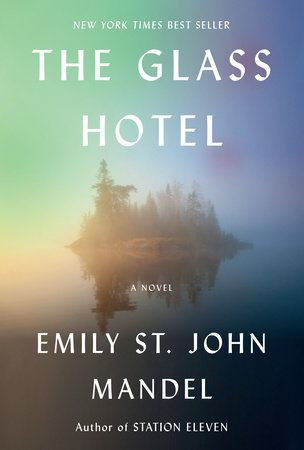
Book Review: The Glass Hotel by Emily St. John Mandel

The Glass Hotel by Emily St. John Mandel


“There is exquisite lightness in waking each morning with the knowledge that the worst has already happened.”

The publisher’s blurb tells you virtually nothing about what this book is about. In fact, the first 50 pages leave you wondering where Mandel is going with this one. Vincent is a bartender at the Hotel Caiette, a five-star glass hotel on an island in British Columbia. Jonathan Alkaitis works in finance and owns the hotel. When he passes Vincent his card with a tip, it’s the beginning of their life together. Jonathan sweeps Vincent up into a world of wealth and greed. At the heart of this book is a Ponzi scheme and the financial collapse of 2009 which makes this even more of a sobering read, now that the stock market is crashing and recession looms.

If you intend to pick up this book because you loved Station Eleven, bear in mind that the subject matters are nothing alike. But the way the books are written is actually quite similar. Mandel has a way with words, every single sentence matters and is important. This book is a real puzzle with pieces scattered all over the different chapters and they all come together at some point to make a full picture.

“Leon hadn’t understood, and he’d given Alkaitis his retirement savings anyway. He didn’t insist on a detailed explanation. One of our signature flaws as a species: we will risk almost anything to avoid looking stupid. The strategy had seemed to adhere to a certain logic, even if the precise mechanics–puts, calls, options, holds, conversions–swam just outside of his grasp. ‘Look,’ Alkaitis had said, at his warmest and most accommodating, ‘I could break it all down for you, but I think you understand the gist of it, and at the end of the day the returns speak for themselves”

The characters in this book are genuinely unlikeable characters. They are opportunists, grabbing whatever life offers them at the expense of so many people while convincing themselves that they are not monsters. The way Mandel writes about the people who are affected when the ponzi scheme finally collapses is heart wrenching. People losing their homes, their retirements, pensions, working well into their 70’s just to survive, losing houses, etc. It’s also fascinating how people never question things that are too good to be true, there was always a feeling that something wasn’t right but those feelings were brushed aside.

This is an effortless read. I adored the writing. Mandel makes sure all her characters have layers, you start to feel like you know these people, you imagine what you would do if you were in their shoes and your heart breaks when theirs does too. This book is weirdly beautiful for a finance book and even if you’re not at all interested in finance (which i’m not), it still captures you from beginning to end. I gave this book 4 stars because even though I loved it the last 50 pages just dragged on for me, I didn’t need everything wrapped up that much. Still a very compelling novel. I definitely recommend.


Have you read this one? Will it be making it on your TBR?


Leggy