Dysfunctional Families, Fiction, literary fiction

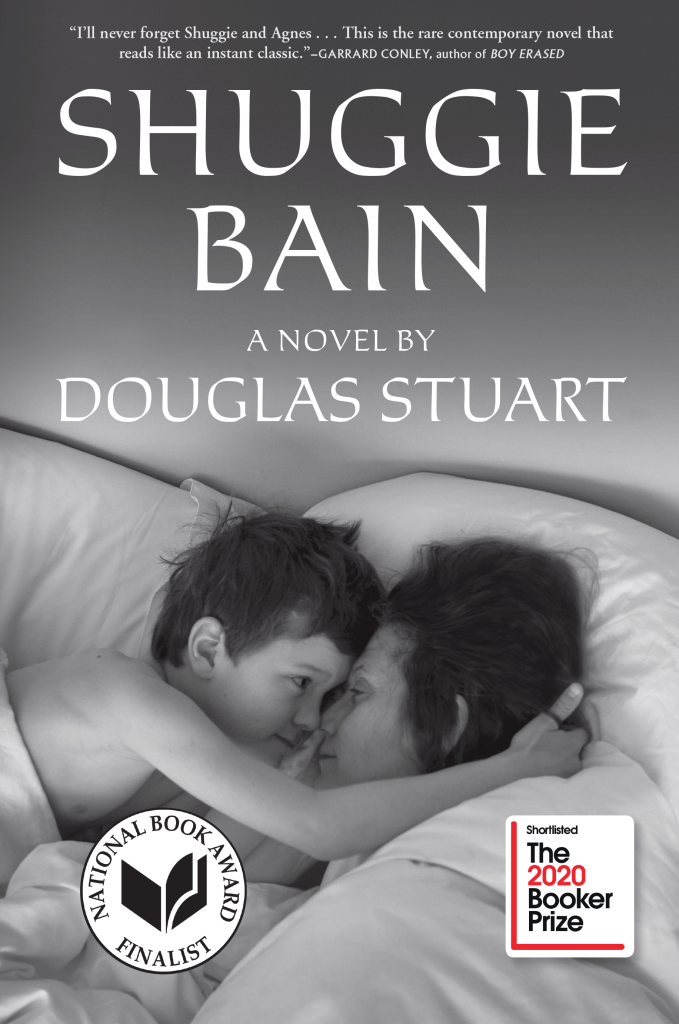
Book Review: Shuggie Bain by Douglas Stuart

“She had loved him, and he had needed to break her completely to leave her for good. Agnes Bain was too rare a thing to let someone else love. It wouldn’t do to leave pieces of her for another man to collect and repair later.”

Shuggie Bain tells the story of a family in 1980s Glasglow, Scotland. Thatcher’s policies have put husbands and sons out of work and the city’s notorious drugs epidemic is waiting in the wings. This story delves into Shuggie’s family and their history. There is Agnes Bain who is Shuggie’s mother and his entire world but is a burden for him and his siblings, his father, who he is named after, is a philandering taxi driver who has left his mother completely broken, his siblings who fight to get away from the burden that is their parents and their grandparents who have had to pick up the pieces for so long. This is a story about addiction, sexuality and love.

I picked up this book because I’m waiting for my library to release Stuart’s John of John to me which has just been long listed for the Booker prize and was Oprah’s book club pick for May. I decided to pick up Shuggie Bain because everyone referred to him as the author of Shuggie Bain and I’d never even heard about this book before. This book won the Booker Prize in 2020. Anyway, this book should not have been titled Shuggie Bain because it was not about him at all. This was about the entire Bain family and more prominently about their mother, Agnes Bain. It is about how Agnes’ choices and her life might have shaped her children’s life. Shuggie isn’t even 16 when the story ends so we don’t even see how her choices shaped his life at all. I couldn’t actually figure out who Shuggie was on the page because the author spent the entire time telling us how the kids perceived him and not how he actually was. His entire character was defined by his sexuality or what everyone around him saw as him being different because Shuggie never actually came out as gay, but everyone agreed he didn’t behave or walk like a “real” boy.

Agnes Bain was someone who the author did not manage to make sympathetic to me. I found everything about her to be slightly pathetic, and I felt bad that I just wanted her to be off the page so I could get to the part where Shuggie grows up. Shuggie never grows up and Agnes dominates the entire book so essentially, I did not get what I wanted at all or what the title of the book promised me. Agnes makes choices without ONCE putting her kids first. Not once. Every single choice she makes in this book was self-serving and in pursuit of male companionship. She leaves a stable marriage with two kids after having an affair with a taxi driver, she then succumbs to addiction to dull the pain from the treatment she gets from said man in her second marriage, she then uproots her kids from their grandparents’ house to a house she’s never seen before still in pursuit of this man and when said man finally leaves her and she manages to achieve sobriety she goes back to the drink because of another man. Agnes was too male centered for me to be sympathetic to her story.

Shuggie is sexually molested by multiple people in this book but at no point do we know what Shuggie actually feels about these incidents. We move right past them to being told how many cigarettes and bottles of alcohol Agnes was having while her child was being molested. We get multiple incidents of people molesting him and a scene where he thinks it’s so normal that he offers himself as payment to a taxi driver when his mother kicks him out of the house without any money, but we never even see Shuggie struggle with this. He moves right past it to continue being a caretaker for his mum and trying to keep her alive without any thought to his well-being.

Agnes’ other two kids Catherine and Leek. Catherine has the right idea to get out as soon as she could. She marries her stepfather’s cousin and skips out of Scotland straight to apartheid South Africa to supervise the blacks. Apart from the moving to South Africa to help with all the oppressing, I actually thought she had the best idea to leave Agnes. She knew from the start that she wasn’t going to stay and save her mother, and she took the first flight out of the dysfunction while Leek and Shuggie wallowed in it. When Leek finally gets out, he has only one sentence of advice for Shuggie – leave as soon as you can, but Shuggie loved their mother too much and did not know any other type of life to escape of his own free will.

Anyway, I know I’m in the minority, but I found this book very one note, but this is a favorite in the literary community so still give it a go. I gave this 3 stars on Goodreads.

Leggy

literary fiction, Mystery

Book Review: Wild Dark Shore by Charlotte McConaghy

“But here is the nature of life. That we must love things with our whole selves, knowing they will die.”

Dominic Salt and his three children are caretakers of Shearwater, a tiny island that is home to the world’s largest seed bank. As Shearwater risks being lost to rising sea levels, the island’s researchers have fled and only the Salts remain. They have been tasked with packing up most of the seed bank so that the next ship can carry the Salts and the seeds back to the mainland before the island drowns. During the worst storm in living memory, a woman washes ashore. The family nurses the woman, Rowan, back to strength but she has come to look for her husband, a man who was one of the researchers and has since gone missing.

This book got on my TBR list because it was on every round up list last year. I was so desperate to read it because people who I trust loved it so much. Unfortunately, I did not feel the same way. I feel like this book was just not for me. I found the characters to be exhausting in a way I should not have. I wonder now if I just read this book at a bad time for me and maybe if I had read it at a different time, I may have liked it? I also do not like the miscommunication trope at all. You are adults, open your mouth and have an honest discussion especially when the circumstances did not call for that at all. All the things that came afterwards could have been prevented if the truth had been discussed immediately.

The actions the characters took did not make the mystery make any sense. I was expecting a literary fiction about real characters that made me think about the environment and the human condition but all I got were one-dimensional characters that were all made quirky in their own ways. I think authors think giving a character some quirky characteristics conveys depth to that character and it really doesn’t. And then we jump from the two adults being so paranoid and suspicious of each other to sudden lust. They can’t help themselves which is so fascinating to me. You think this man is responsible for the disappearance of the husband you have crossed the ocean to find but you still have space between your paranoia to have a little sex? I did not understand the motivations of the characters.

I do think there are some moments in this story that resonated with me and brought some emotional depth. The scene with the whale and her baby was so well written that I was rooting for them so much. There are passages like that that made me really love the author’s writing, but these scenes are very few and far between. As the ship arrives to the island and we hurtle towards the conclusion the author loses all subtlety and decides to go for an emotional punch that felt quite manipulative and did not work for me at all. It all felt completely unnecessary to the plot and designed to wring as much emotion from the readers as possible. Also, I know this book is about climate change and the way the author hammers us over the head with the passages written with the POV of the young boy, it got tiring and after a while it even stopped registering as I read. I just wanted it over so I could get back to the action.

Obviously, I’m in the minority with this one but I was absolutely disappointed with my experience with this book because I was so sure it was right in my wheelhouse. Unfortunately, this did not work for me at all and after a while I just wanted it to end. I gave this book 2 stars on Goodreads.

Leggy

dystopian, Fiction, literary fiction, women's fiction

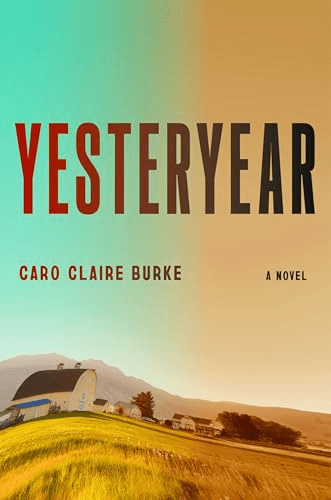
Book Review: Yesteryear by Caro Claire Burke

“The goal of an influencer is not to be lovable, and it is not to be unbearable. The goal is to be both at once. In other words: addicting.”

Natalie lives a traditional lifestyle. She’s married to a senator’s son who is a handsome cowboy, her charming farmhouse is rustic, and her six children are all so perfect and delightful. Natalie is an influencer with millions of followers whose father-in-law is currently running for president and wants to use her influence to get him to the white house. She never discloses the workers on the farm, the producers behind the scenes, or the nannies that keep everything running. She hides the microwave and the industrial grade fridges and ovens and performs for the camera. One day, she wakes up and she’s living a life that isn’t hers. Her home, her husband and her children are different but familiar. Her kitchen has no electricity, and her children are dirty and strange and there are no nannies.

I think this is one book where the premise was so much better than the actual execution. What I was expecting was not what I got. The way this book was marketed was very misleading and even though I still rolled with the punches as they came, the reading experience ended up being unsatisfying. But I also like the way the main character Natalie was written. She drove me crazy because sometimes she would have so much insight about the disparity between men and women, but she would never come to the right conclusions. She just kept digging in her heels even when a smart woman like her should have pivoted. I never felt a lot of dislike for her, in fact, I actually felt such compassion for her and was sad to see her life just go downhill.

Natalie’s descent into paranoia was hard to read about. She became so resentful of other women and the commenters, and she would make up elaborate stories about how horrible their lives were compared to the perfect life she had curated. At points, it seemed that she had forgotten that her life on social media was not actually the life she was actually living. The writer traps us inside her mind as it unravels into chaos, and it was not a nice place to be at all. Nothing in her life is grounded and every experience is filtered through the lens of how it would appear on social media. She completely surrenders her life to the new producer who enters her life and even though there were so many red flags, she completely ignores them just because of the number on social media.

When Natalie wakes up in the actual trad life she’s been curating online and when we find out how she got there and what the premise actually what, it leaves me so disappointed. Because you’re left to wonder if Natalie is actually a manipulative social media mastermind or just a mentally ill woman who is trapped in the identity she has built and can no longer recognize the real world from the one she has curated. The author completely denies any responsibility of what kind of story she’s telling. She expects the audience to decide what Natalie is. You start to wonder if this is a book about an influencer or just a book about how mental illness shows up in women. She completely gives over the responsibility to the audience to decide what type of book they want to be and I don’t know if this is genius or if this is a way for the author to escape all criticisms about labelling large groups of people – Christians, trad wives, influencers etc.

Eventually, after going through the chaos that is Natalie’s mind and ultimately arriving to an end that doesn’t wrap up with a bow. I think this is one book that is going to stay with the reader whether you enjoy it or not. I ended up giving this 3 stars on Goodreads.

Leggy

Black Authors, Historical, literary fiction

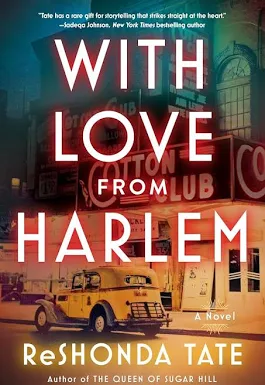
Book Review: With Love From Harlem by Rashonda Tate

“Being a negro woman in America teaches you resilience. You learn to focus on the good, even when it’s hard.” 

It’s 1943 and Hazel Scott is a black woman breaking boundaries in the entertainment world. She is a prolific jazz musician, a TV and film star and also a civil rights advocate in her own way. She meets Adam Clayton Powell Jr., a preacher turned politician who sweeps her up with his charm except for the fact that he is married. Hazel cannot resist him and the two go on to have a long relationship filled with ups and downs. The book takes us along the rollercoaster of their relationship that includes Hazel losing herself and opportunities, while trying to maintain the facade of a power couple.

“When a mistress becomes a wife, that means the mistress spot is now open”

I was reading this book and smiling at the familiar names like Billie Holiday, Nina Simone etc. I was already fascinated by the fact that Tate was seamlessly incorporating a fictional character and building a world around her with real life people. So imagine my surprise, 80% into the book when Quincy Jones makes an appearance and I decide to do a google search and realize that HAZEL SCOTT IS REAL! quickly followed by shame that I had never heard of Hazel Scott – but I believe that was the author’s goal in writing this book, giving her name life.

One day, you’ll look up and realize you’ve poured yourself out for everyone else—and there’s nothing left for you”

The book centers around the life of Hazel, and her messy love life that includes having a husband as her op. The story takes us through the years from Harlem to DC to Paris and feels like peeking behind the curtain of the every day lives of the names we have heard so much about. I truly appreciate and respect what Tate did with this book because it had to have taken a LOT of time and research to create and build this world. Some creative liberties were taken but they were taken at the right spots and kept the story moving. At certain times, the writing felt a bit amateurish and I had to remind myself that it was probably better that way vs. an overwritten story that was already complex and had many moving parts.

Overall, I enjoyed this book and was swept away by the world “enhanced” by Tate. The book had me googling so many things and I learned a lot that I did not know before. This was historical fiction done right and I definitely recommend.

Taynement

african author, african stories, Black Authors, Fiction, literary fiction, women's fiction

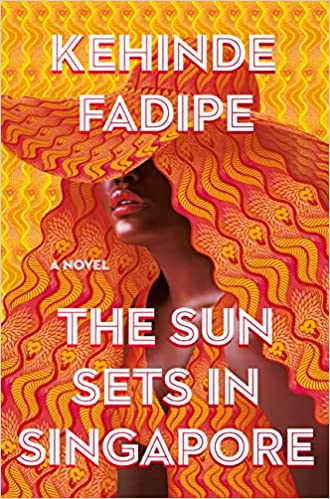
Book Review: The Sun Sets In Singapore by Kehinde Fadipe

“Sometimes the best person to listen to is the person who did exactly what you don’t want to do. Don’t let what your grandparents or your mother or anyone else wants or wanted influence you now”

Dara, Amaka and Lillian, all of Nigerian heritage, are currently expats living in Singapore. Dara is a lawyer, Amaka is a banker and Lillian was a pianist who moved from the U.S with her American husband. They are all living the lives they have created for themselves in Singapore, while each fighting their own battles until a new arrival, Lani steps in and affects their lives in different ways.

This was an okay read for me. It had an intriguing premise but I think I wavered on the execution. One minute, I found myself invested in the characters because Fadipe did a good job in fleshing them out and you get a good sense of who they are and how they are handling their various predicaments. We get a good grasp of their background and their families and the connection and friendships between each other, also made sense. Dara’s struggle as a black woman in a law firm, Amaka dating a non-Nigerian and not seeing it as long term and Lillian feeling lost and trying to find her place were all realistic.

But then the next minute, it just felt like the drama was never ending and it was being stretched out for no reason and because I was itching for a resolution, the characters started becoming annoying. I specifically found Dara to be bratty. The pace picked up the second half of the book and because so much was happening, I didn’t know how I felt. So much was going on and I didn’t have the bandwidth to care deeply for all of them. That’s the other thing, be prepared for a million and one stories going on at the same time.

I did this book on audio and I honestly wouldn’t recommend doing audio, if you are Nigerian. The narrator had a British accent and was fine for the general narration but when it came to pronouncing the Igbo names, the pronunciation was terrible and in the little Igbo spoken, it was butchered. Her American accent was such struggle bus and it had me cringing and the last straw for me was when she read out the famous 1004 apartments as 10-04 vs. one thousand and four. There were also a bunch of volume or tone fluctuations where you could tell the difference from when she picked it up at a different time.

Overall, as mentioned above, I didn’t hate it but I didn’t love it either. I do think that it was a decent read that serves well as a filler read or reading palate cleanser. I think it is obvious that this is a debut book but I would still check out other books by her.

Taynement

african author, african stories, Black Authors, Fiction, LGBT, literary fiction, Nigerian Author, romance, We Chit Chat

We Chit Chat – Blessings by Chukwuebuka Ibeh

“It’s one thing to love a child, but it’s an entirely different thing for the same child to feel loved. A home is the last place a child should feel conditionally loved.”

Leggy: I remember seeing this book months ago on Bookstagram. An Asian content creator popped up on my feed talking about this book and I sent it to you and suggested we read this.

Taynement: Yep! It was a book by a Nigerian author being spoken about by a non-Nigerian and it piqued my interest because something I always talk about is wondering how people who aren’t familiar with the culture digest books about Nigeria.

Leggy: This book follows Obiefuna, who was born into a lower middle-class family in Nigeria. His peculiarities make him the black sheep of his family and when his father finds him in an intimate position with another boy, he ships him off to seminary school.

Taynement: To be clear – his peculiarities to them were the fact that he loved to dance and wasn’t particularly good at sports but in reality, he was gay. Obiefuna was a rainbow baby after his mother suffered many losses. He turned out to be a golden child, and his parents attributed their successes to his birth, and he held a special place in his mother’s heart. His father makes the sole decision to ship him off after finding him in a compromising position with a male apprentice without letting his mother know the reason why.

Leggy: This is one of the best books I’ve read this year. I think what makes it so impactful is how quiet and not exaggerated it is. Every time I thought the author was going to make an outrageous choice he always chose something different. And I think the quiet choices make this book even more powerful because you recognize the characters. You know this would absolutely happen in Nigeria. There’s no exaggeration to pull you out of the story and other Obiefuna’s humanity.

Taynement: Yes, it was very realistic, and I agree that it was quiet and not exaggerated. It’s funny because some other books that I have as my faves this year share those same characteristics.

Leggy: What did you think about his experience in boarding school?

Taynement: I think it was true to form. I chuckled when his dad chose that as a form of punishment because it was almost predictable that he would explore his sexuality there. I would say though that I had my heart in my throat the entire time because I kept expecting him to be raped especially when he built a connection with Senior Papilo.

Leggy: Exactly. I was like sending your son to an all-boys school because he’s gay is a choice. That’s something I loved about this book. I thought Senior Papilo was going to rape him as well but that never happened. The author never made any shocking choices and that choice would have been expected.

Taynement: But again, another reason I liked this book is also showing how flawed our parents’ generation was in parenting. They just did not have the tools. His dad thought he was doing his best. Another way that this manifested in the book is when Uzoamaka (Obiefuna’s mother) visited the hospital with Anozie (Obiefuna’s father) and the nurse makes the comment about him being a good man because he accompanied her to the hospital when most men wouldn’t. Anozie loved his family, and he was showing up for his wife.

Leggy: I do believe Anozie genuinely loved his family. He even tried to hide the fact that he found out Obiefuna was gay from his wife because he thought it would break his wife’s heart. When they finally had the discussion in the open and she told him where else would a boy like him be loved if not at home?

Taynement: I do think certain threads were left loose or maybe I did not pick up on their usefulness to the story. The two most prominent were – Ekene’s (Obiefuna’s brother) plot purpose and when Senior Papilo takes him to a brothel.

Leggy: I think Ekene served as a juxtaposition to Obiefuna.

Taynement: I get that, but I don’t know if it was well done. The juxtaposition didn’t seem to have any effect on Obiefuna? Basically, if he was left out of the story would it have affected my understanding of Obiefuna?

Leggy: It was because of him that Obiefuna even came in contact with any traditional masculine things. He would have never gone to the football field if Ekene did not exist. Also, even though Ekene was not that smart he was left in the private school while Obiefuna was moved to seminary school because of his gayness leading the private school to have a meeting with Uzoamaka inquiring why Obiefuna was moved.

Leggy: I also expected Obiefuna’s brother to turn on him at some point because he was portrayed as so macho and being complete opposite of him, but they actually stayed closer than I expected them to. When Obiefuna comes back from holiday and Ekene sings for him to dance. I thought that was such a touching scene.

Taynement: The scene where he tells Obiefuna to dance, do you think it was him acknowledging it? Ekene just seemed to be in the dark about a lot of things.

Leggy: I absolutely think he knew. And I think that scene was a way for him to acknowledge it without having that conversation especially from someone considered traditionally masculine. He was never going to confront it head on.

Leggy: Also, about Senior Papilo taking him to a brothel, honestly, I thought Papilo was gay the way he gathered all those young boys to himself, the way he treated them and the way they competed for his attention. So, when the brothel happened, I was confused. I was actually relieved that the boys just went to a brothel. I genuinely thought they were leaving the school to do something more sinister like armed robbery and that Obiefuna was going to get caught up in it. I was so relieved that that wasn’t the case that I didn’t even think about the brothel anymore. But I think it speaks to how straight men initiate younger boys into what they believe manhood is.

Taynement: Interesting. I do think Papilo is gay but wasn’t going to “give into it”. Papilo is one of those Nigerian men who will marry a woman and live a straight life and a part of me wondered if he was giving Obiefuna an out by taking him to the brothel.

Taynement: And something that struck me was up until the end of the book had Obiefuna actually had sex? He mentions touching and rubbing and we never really going into the nitty gritty of his relationship with the artist.

Leggy: They never described his actual sexual relationship with the artist. Only that he did a lot of drugs with him and I was so worried because obviously Obiefuna was depressed and grieving and I was worried about the path he was heading down. But he never had actual penetrative sex with the long-term boyfriend that comes after the artist.

Taynement: Overall, I think that is the beauty of this book. It was written so well, and it maneuvered from topic to topic so deftly and the story just flowed.

Leggy: This book culminates with the 2014 law that criminalized gay relationships with a hefty 14-year sentence. That was devastating to read about.

Taynement: It was a good balance of reality. I liked the fact that Obiefuna found a community because they do exist in Nigeria.

Leggy: And then when one of his friends was kitoed. By the way, this is an actual thing that happens in Nigeria and that’s when straight men pose as gay men on dating apps to lure gay men out and then they get beaten up, videos are made of them confessing to be gay and then they are robbed while law enforcement looks the other way.

Taynement: All in all, this was a fantastic, well-written book that I thoroughly enjoyed.

Leggy: Such a fantastic book. I loved it so much and it was an easy read.

Book Related Topics, Fiction, Historical, LGBT, literary fiction, Memoirs, romance, women's fiction

3 for 1 Book Reviews

It’s been a minute, so figured I’d do a three-fer before the year runs out. The reviews features a beloved author, a memoir and a Booker Prize winner.

Atmosphere by Taylor Jenkins Reid: If you have been a long time reader of the blog then you know how much I love me some TJR, in fact I ranked all her books here. I was excited to read this one but it pains me to say that it didn’t hit the way the other books did. One of the things I like about TJR as an author is how versatile she is and how she doesn’t have a formulaic writing style. This one centered around Joan who is an astronaut. Based in the 80’s it showed how she had to fight to be recognized in her field but it was also a book about Joan’s sexuality at a time when she couldn’t necessarily be loud and proud. In hindsight, seeing how much praise this book has received, I am wondering if I’m the problem. Now don’t get me wrong, the book was not bad at all but I do think it was all over the place. There were so many storylines and timelines and didn’t seem well put together as is typical of TJR. It took me a minute to get all the characters right and remember their respective timelines. It also felt like I was being forced or told what to feel and I’d rather it be organic.

Flesh by Davis Szalay: FOMO got the best of me, and I had to see what all the fuss was about and even after reading it, I still don’t get it. Listen y’all, I am trying to get used to this new wave of abstract writing. The book follows Istvan from when he was a teenager in Hungary where he experiences something traumatic and then we follow him to London as he gets older and lives a completely different life, almost as if the incident never happened. As he gets older and has all these different experiences, I keep thinking they would have some connection to each other but the more there didn’t seem to be one, the more confused I got about what the point was. I do think it is a very character driven book (which aren’t usually my favorite) so that could be the explanation for that but if the character didn’t seem to be processing all the things that were happening to him and doesn’t seem to care, it’s very hard for us the readers to be invested and care as well. The ending felt like walking into a glass door because I didn’t realize that was the end. It was very abrupt. Someone needs to explain to me why this was the winner of the prize.

Accidentally on Purpose by Kristen Kish: Kristen from Top Chef fame wrote a memoir and she is such a lovely person (and a hottie) and that was probably most people’s motivations for reading this book and unfortunately it was just okay. I know everyone wants to write a memoir but if you are not willing to be VERY open or share salacious details then it’s okay to just leave it in your journal. Kristen does the thing where you share but you aren’t really sharing anything. Even when she gets to certain points, she doesn’t name names. You do get the sentiment of the title where it feels like everything just fell into place for her in her career, even though she has the talent, there was still a great deal of luck on her side, and I appreciate her owning that because sometimes successful people feel like admitting luck diminishes their hard work. I also liked how she admitted not having a desire to find her bio parents (she is adopted) and not really looking into her Korean roots until later in life. Kristen does share her deep love for her wife, and you can see it come through. There is a point in the book where she is talking about her and we hear sniffles and honestly, it felt put on (don’t hate me!). I don’t think there should be one formula for a chef’s memoir, but I will say that there wasn’t that deeeeeep passion for food that you usually hear from other chefs, and it just seemed like something that’s part of her life. It felt like there was more of a passion for hosting (and that’s okay). I listened to this on audio. Overall, I don’t think it was terrible, but I don’t think it was very good either.

So there you have it. Have you read any of this? What did you think? Do you want to check out any of this after reading these reviews? Let me know!

Taynement

african author, african stories, Black Authors, Fiction, literary fiction, romance, We Chit Chat, women's fiction

We Chit Chat: My Parents’ Marriage by Nana Ekua Brew-Hammond

Leggy – I’d never heard of this book before you asked for us to read this together. Also, I thought it was a nonfiction book about the author’s parents’ marriage, and I went into it without knowing anything about it.

Taynement – Yeah, I saw it on Instagram from a follower, and it looked interesting. I love me an African family drama plot. I found it quite interesting, not necessarily because of the writing but more from the human psychology aspect.

Leggy – I ended up finding it deeply fascinating. Also, this book is compulsively readable.

Taynement – Yes! I found it to be such an easy read.

Leggy – I started it yesterday and finished it in 24 hours. It’s hard to put down.

Taynement – The author kept it simple and didn’t overwrite it which I think you would expect because of the complexity of the subject matter. To break it down – the book centers around Mawuli Nuga and how his sexual indiscipline affected his many families, but the story is told through one of his children – Kokui and how her quest to beat the cycle of her father’s actions landed her into a different kind of cycle.

Leggy – Yes, she kept it simple and actually showed you the story, the family and the men without having to spell it out to the readers. She didn’t hit you over the head with any agenda.

Taynement – The book does start with a family tree which means nothing to you before you read the book but makes all the sense when you’re in it.

Leggy – Yeah, I skipped that family tree. It’s just like fantasy books that start with a map. I never study those. I think that if you do your job well, then I’ll know what is in the family tree or in the map after I’ve read your book.

Taynement – Like I always say when we do this, I always wonder how non-Africans ingest a book like this because it makes sense to us, but it must seem so strange and bizarre to them. Mawuli kept making babies and swapping wives like underwear with nary a thought of how they felt. We see the different ways the wives/mothers handled it with Kokui’s mother choosing to go back to her home country but choosing to still stay a legal wife for her children.

Leggy – And then accepting him as a husband once a year when he comes down with the kids for Christmas.

Taynement – While the current wife chose to ignore his indiscretions with the hope of getting his assets upon his death. Thing is, it’s so common for Africans to find out they have outside siblings that I can see how Mawuli didn’t bat an eyelid.

Leggy – Nothing about their dad even fazed me.

Taynement – Children are a sign of success.

Leggy – And he accepted and trained every single child, even the older Antony guy who he disowned. He still paid his way to London and paid his fees till he dropped out.

Taynement – The main fascination of this book was Kokui. Before we get into her, I did wonder why the author chose to make her sister a side character and not do a side by side.

Leggy – I’m glad we just focused on one person. I think a side by side might have made the book more bloated, but I also think she just wanted us to follow one person and see if the person can break the cycle.

Taynement – That’s fair. It was just a floating thought.

Leggy – It’s so easy to run your mouth about all the ways your parents are doing life wrong until you’re having to make those same choices.

Taynement – Kokui was so determined to not be her mum and thought her mum was basically an idiot which I understand, but what I didn’t understand was the swiftness in which she wanted to marry her husband. It was so immature and… idiotic?

Leggy – I actually didn’t think her mum was an idiot. I understand why her mum stayed. Her mum thought her staying would secure her children’s inheritance. Their mother told them that their dad promised her that one of the two of her girls would be appointed to run his company. She felt like she had made a shitty choice in marrying him and was trying to salvage it as best as she could. But yes, I found Kokui to be such a dumb and stupid character. I also went from not liking Boris to being as irritated as him about Kokui’s decisions and naivete.

Taynement – I think she was immature and tunnel visioned. You have to remember that she was privileged. A privileged kid who didn’t seem to realize how privileged she was. She thought her father’s indiscretions gave her a ticket to say she had a hard life. Which part annoyed you the most?

Leggy – The way she kept saying she wanted a job that would give her a spark. Like girl, you are working in New York illegally. Where would you get that job?

Taynement – Lol. Again, naive. What did you think of Boris in the NYC days?

Leggy – I understood him completely. He was being realistic about their lives. They needed to save. Also, he made the right decision not to rent an apartment for those first 6 months before they left for school but to stay on Sammy’s couch. That’s how they saved so much money. Also, Kokui staying and helping out with babysitting was always the logical thing to do.

Taynement – So even before they left for New York, I think there was an underbelly to Boris. He wanted the benefits of her dad but was uncomfortable with it.

Leggy – I felt that from the second they met. That’s why I was so annoyed by her being so fascinated with him. You could tell there was an anger at her for having an easier life. Also, her desperation to marry him and to have a better marriage than her parents was insane. I would think the more logical thing would be not to marry at all. Why did she not dread getting married? Why did she run so fast towards it?

Taynement – Indoctrination. She thinks she’s so above it all but could not fathom rebelling against the norm by just not getting married. Another aspect I found fascinating is they both disagreed on a lot of things but were on the same page when it came to kids.

Leggy – That was such a relief that they were on the same page with kids and even birth control. Imagine bringing a kid into that and overcomplicating the relationship before you’ve had a chance to figure out how it’s all supposed to work. Also, at least Boris was hardworking and smart. Honestly, my fear was that he would become abusive. That’s also why I liked this book so much. It wasn’t cliche in the way I was expecting.

Taynement – Yes, exactly. His deference to Sammy annoyed me.

Leggy – I think he was just grateful to how much Sammy helped them those first 6 months in New York City. Do you think Kokui succeeded in having a marriage better than her parents?

Taynement – I think it was too soon to tell and another tick for the author for me. I like how she didn’t make Boris bad or good and truly showed the complexities of a relationship. I was fully with Kokui wanting to leave but then her seeing that he was ambitious and was there for her through the big thing that happened, it wasn’t so clear cut. I honestly didn’t consider her parents’ marriage a marriage. It was an arrangement. At least Kokui and Boris cared for each other.

Leggy – I think it was a marriage. Remember they were together for 12 long years before the big reveal which then led to the rift that we see in the book. I agree with you about Kokui and Boris’ marriage. I like that it wasn’t black and white, it was very complex. And nobody is ever going to give you that perfect marriage. There are things that should be deal breakers and then you should just try to live with the ones that are not.

Taynement – I actually think they can make it work. They need time, maturity and money.

Leggy – Yes, I think their marriage is going to be fine. It won’t be the fairytale marriage she envisioned but it will have the messiness of what a real life actually consists of.

Taynement – Were there aspects of the book you didn’t like?

Leggy – Honestly when I started this book, I was so annoyed by the characters but after finishing it, I just felt like there was no misplaced word. All the things I thought I did not like from the beginning became a piece to the puzzle that we could not do without. I didn’t think it was the best written book ever, but it told a very simple story in a compelling way.

Taynement – Yes, the bones of the story were good enough to get away with such simple writing. Would you recommend this to someone?

Leggy – Yes but honestly probably just to other Africans.

Taynement – Ha. If we do have any non-African readers, I’d love to know your thoughts on this book.

dystopian, Fantasy, literary fiction

Book Review: Tilt by Emma Pattee

“You and me, when we die, we’re going to evaporate back into the earth like we were never even here. Bodies made of air, bodies made of dirt.”

Annie is 9 months pregnant and shopping for a crib at IKEA when a massive earthquake hits Portland, Oregon. With no way to reach her husband, she decides to walk to his workplace and then go home with him. As she makes her way across Portland and witnesses human desperation, kindness and depravity, Annie reflects on her struggling marriage, her disappointing career and her anxiety about having a baby.

“People will tell you that everything is clear in hindsight, but really it’s just rewritten.”

The events in this book all take place within a day. As Annie makes her way across Portland, she forms an unlikely friendship with a young woman who helped her at IKEA, and they walk some of the way together. Annie’s reflection about her marriage and her past was super compelling to listen to. Looking back at the stagnation of your life when it’s been upheaved is very fascinating. She performs an autopsy of her life and marriage and how she got there, as she walks to her husband. And I did not like her husband, at all. I understand how hard it is to let go of a dream, but I felt like he was selfish in not accepting that that dream was dead.

“I want something more than this. That thought is like a pebble tossed inside a lake, sinking down into darkness. It’s better to forget the things you want but don’t have. The happiest people are the ones who want what they already have. This ache, this ache inside of me, I don’t know how to get rid of it.”

This is not a thriller or a suspense. I suspect this expectation and its ending, are the reasons for the middling rating on Goodreads. The book ends at the end of the day with no resolution; nothing is wrapped up in a pretty bow. We are still in the middle of a natural disaster that has decimated hundreds of thousands, and Portland is still on fire. This book is primarily about the journey and not about the destination. I enjoyed the writing so much and I think it kept me pushing. Also, this book is less than 250 pages, so it goes by fast. I think this is a well-executed and thought-provoking novel and you should give it a try.

“While washing the dishes, only be washing the dishes—that’s what he always says. Some Buddhism shit he read on Instagram. Only a man could say something like that.”

If you like plot driven books, then this is not the book for you. Plenty happens since this is the middle of an earthquake, but nothing actually pushes the plot forward. This book is purely character driven and I completely understand why so many didn’t like this book, but I did. If you go into it after reading this review with a clear understanding of what this book is, I think you’d like it too.

Have you read this one? Let me know your thoughts in the comments.

Leggy

Black Authors, Chick-Lit, Fiction, literary fiction, race, romance, women's fiction

Book Review: Can’t Get Enough by Kennedy Ryan

“The world isn’t designed for women like me. Women who’d rather be single literally for years than settle for a partner not worthy of her”

The third of the Skyland series, this story focuses on Hendrix Barry. Hendrix is a great friend, a good daughter, thriving in her career in the entertainment industry and is also happily single with no interest in having kids. Everything is going well until her mom is diagnosed with Alzheimer’s. As Hendrix is trying to adjust to this new reality she meets Maverick Bell.

Maverick Bell is a tech billionaire fresh off a public breakup from a relationship that ended because he doesn’t want any more kids. He is also still grieving the loss of his grandfather to Alzheimer’s as well. The two meet at a party hosted by his ex-girlfriend and it’s an instant connection and attraction. Seems easy but one catch is Maverick’s ex-girlfriend, Zeze have a budding friendship and is Hendrix’s business partner for an upcoming TV show. Does Hendrix stay loyal to a new friend or pursue this once in a lifetime connection? (spoiler alert: she chooses the man)

“Last night, was Maverick asking me to give up my dreams? Or asking to run with me while I chase them?”

I like Kennedy Ryan’s writing and this was no different. Ryan finds a way to infuse real life into romance with a sprinkling of steamy and a dash of fantasy living and this book is no different. As someone who doesn’t really read romance, she serves it in a way that I can digest. We get to read the book from both Maverick and Hendrix’s view point and it was good to know what the other was thinking. Ryan made sure to let us know that she had first hand experience with Alzheimer’s and I think she did a good job of showing how much this disease affects a family both from the person who has it and the caretakers involved. I appreciated how much care she took with the subject matter.

“You said being whole means acknowledging all our parts. And that there were parts of me that wanted to be held, want to be needed and loved.”

Ryan has always been consistent with her characters cherishing strong friendships where the women are always there for each other and encourage each other and I appreciate it. Another thing she did in this book was provide representation for curvy women who are confident in their body and a man who appreciated it. Hendrix is also a woman who was not opposed to being partnered and lived a full life and I liked how it was okay for her to pursue that when she met someone she considered a partner. Her choice to not have children was also good to remind people that it is possible to have that choice.

“I want you to believe that. Every love isn’t forever. We can love people along the way. Relationships can begin and then end.”

Now I liked this book and as a stand alone it is good but I think I’ll say this was the weakest of the trilogy as it was formulaic for me. I am not knocking Ryan for finding a formula that works – Protagonist meets man, there is mucho attraction, they overcome obstacles and decide to jump in, they have hot sex, there is usually an illness/death (which I know she draws from personal experience) and then they live happily ever after with lots of hot, steamy sex. But not without the love and support of good family and good friends – but by the third book the novelty has worn off for me and I know what to expect.

As with most romance novels, I think you have to suspend disbelief for certain things for the story to move along. Some may consider dating the ex of an associate a little messy but maybe the whole point was sometimes you have to be selfish and go for what you want. Overall, it’s a book with a lil’ something for everyone and it works. It’s just that I wanted to love it but only ended up liking it enough.

Taynement