african author, african stories, Black Authors, Fiction, LGBT, literary fiction, Nigerian Author, romance, We Chit Chat

We Chit Chat – Blessings by Chukwuebuka Ibeh

“It’s one thing to love a child, but it’s an entirely different thing for the same child to feel loved. A home is the last place a child should feel conditionally loved.”

Leggy: I remember seeing this book months ago on Bookstagram. An Asian content creator popped up on my feed talking about this book and I sent it to you and suggested we read this.

Taynement: Yep! It was a book by a Nigerian author being spoken about by a non-Nigerian and it piqued my interest because something I always talk about is wondering how people who aren’t familiar with the culture digest books about Nigeria.

Leggy: This book follows Obiefuna, who was born into a lower middle-class family in Nigeria. His peculiarities make him the black sheep of his family and when his father finds him in an intimate position with another boy, he ships him off to seminary school.

Taynement: To be clear – his peculiarities to them were the fact that he loved to dance and wasn’t particularly good at sports but in reality, he was gay. Obiefuna was a rainbow baby after his mother suffered many losses. He turned out to be a golden child, and his parents attributed their successes to his birth, and he held a special place in his mother’s heart. His father makes the sole decision to ship him off after finding him in a compromising position with a male apprentice without letting his mother know the reason why.

Leggy: This is one of the best books I’ve read this year. I think what makes it so impactful is how quiet and not exaggerated it is. Every time I thought the author was going to make an outrageous choice he always chose something different. And I think the quiet choices make this book even more powerful because you recognize the characters. You know this would absolutely happen in Nigeria. There’s no exaggeration to pull you out of the story and other Obiefuna’s humanity.

Taynement: Yes, it was very realistic, and I agree that it was quiet and not exaggerated. It’s funny because some other books that I have as my faves this year share those same characteristics.

Leggy: What did you think about his experience in boarding school?

Taynement: I think it was true to form. I chuckled when his dad chose that as a form of punishment because it was almost predictable that he would explore his sexuality there. I would say though that I had my heart in my throat the entire time because I kept expecting him to be raped especially when he built a connection with Senior Papilo.

Leggy: Exactly. I was like sending your son to an all-boys school because he’s gay is a choice. That’s something I loved about this book. I thought Senior Papilo was going to rape him as well but that never happened. The author never made any shocking choices and that choice would have been expected.

Taynement: But again, another reason I liked this book is also showing how flawed our parents’ generation was in parenting. They just did not have the tools. His dad thought he was doing his best. Another way that this manifested in the book is when Uzoamaka (Obiefuna’s mother) visited the hospital with Anozie (Obiefuna’s father) and the nurse makes the comment about him being a good man because he accompanied her to the hospital when most men wouldn’t. Anozie loved his family, and he was showing up for his wife.

Leggy: I do believe Anozie genuinely loved his family. He even tried to hide the fact that he found out Obiefuna was gay from his wife because he thought it would break his wife’s heart. When they finally had the discussion in the open and she told him where else would a boy like him be loved if not at home?

Taynement: I do think certain threads were left loose or maybe I did not pick up on their usefulness to the story. The two most prominent were – Ekene’s (Obiefuna’s brother) plot purpose and when Senior Papilo takes him to a brothel.

Leggy: I think Ekene served as a juxtaposition to Obiefuna.

Taynement: I get that, but I don’t know if it was well done. The juxtaposition didn’t seem to have any effect on Obiefuna? Basically, if he was left out of the story would it have affected my understanding of Obiefuna?

Leggy: It was because of him that Obiefuna even came in contact with any traditional masculine things. He would have never gone to the football field if Ekene did not exist. Also, even though Ekene was not that smart he was left in the private school while Obiefuna was moved to seminary school because of his gayness leading the private school to have a meeting with Uzoamaka inquiring why Obiefuna was moved.

Leggy: I also expected Obiefuna’s brother to turn on him at some point because he was portrayed as so macho and being complete opposite of him, but they actually stayed closer than I expected them to. When Obiefuna comes back from holiday and Ekene sings for him to dance. I thought that was such a touching scene.

Taynement: The scene where he tells Obiefuna to dance, do you think it was him acknowledging it? Ekene just seemed to be in the dark about a lot of things.

Leggy: I absolutely think he knew. And I think that scene was a way for him to acknowledge it without having that conversation especially from someone considered traditionally masculine. He was never going to confront it head on.

Leggy: Also, about Senior Papilo taking him to a brothel, honestly, I thought Papilo was gay the way he gathered all those young boys to himself, the way he treated them and the way they competed for his attention. So, when the brothel happened, I was confused. I was actually relieved that the boys just went to a brothel. I genuinely thought they were leaving the school to do something more sinister like armed robbery and that Obiefuna was going to get caught up in it. I was so relieved that that wasn’t the case that I didn’t even think about the brothel anymore. But I think it speaks to how straight men initiate younger boys into what they believe manhood is.

Taynement: Interesting. I do think Papilo is gay but wasn’t going to “give into it”. Papilo is one of those Nigerian men who will marry a woman and live a straight life and a part of me wondered if he was giving Obiefuna an out by taking him to the brothel.

Taynement: And something that struck me was up until the end of the book had Obiefuna actually had sex? He mentions touching and rubbing and we never really going into the nitty gritty of his relationship with the artist.

Leggy: They never described his actual sexual relationship with the artist. Only that he did a lot of drugs with him and I was so worried because obviously Obiefuna was depressed and grieving and I was worried about the path he was heading down. But he never had actual penetrative sex with the long-term boyfriend that comes after the artist.

Taynement: Overall, I think that is the beauty of this book. It was written so well, and it maneuvered from topic to topic so deftly and the story just flowed.

Leggy: This book culminates with the 2014 law that criminalized gay relationships with a hefty 14-year sentence. That was devastating to read about.

Taynement: It was a good balance of reality. I liked the fact that Obiefuna found a community because they do exist in Nigeria.

Leggy: And then when one of his friends was kitoed. By the way, this is an actual thing that happens in Nigeria and that’s when straight men pose as gay men on dating apps to lure gay men out and then they get beaten up, videos are made of them confessing to be gay and then they are robbed while law enforcement looks the other way.

Taynement: All in all, this was a fantastic, well-written book that I thoroughly enjoyed.

Leggy: Such a fantastic book. I loved it so much and it was an easy read.

african author, african stories, Black Authors, Fiction, literary fiction, romance, We Chit Chat, women's fiction

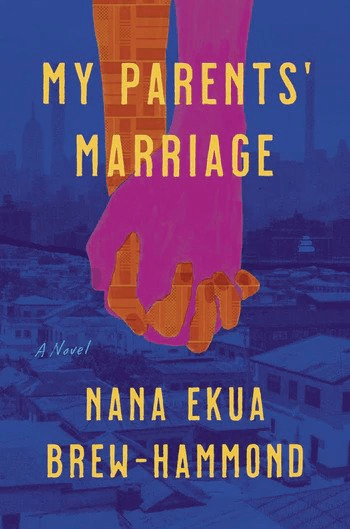
We Chit Chat: My Parents’ Marriage by Nana Ekua Brew-Hammond

Leggy – I’d never heard of this book before you asked for us to read this together. Also, I thought it was a nonfiction book about the author’s parents’ marriage, and I went into it without knowing anything about it.

Taynement – Yeah, I saw it on Instagram from a follower, and it looked interesting. I love me an African family drama plot. I found it quite interesting, not necessarily because of the writing but more from the human psychology aspect.

Leggy – I ended up finding it deeply fascinating. Also, this book is compulsively readable.

Taynement – Yes! I found it to be such an easy read.

Leggy – I started it yesterday and finished it in 24 hours. It’s hard to put down.

Taynement – The author kept it simple and didn’t overwrite it which I think you would expect because of the complexity of the subject matter. To break it down – the book centers around Mawuli Nuga and how his sexual indiscipline affected his many families, but the story is told through one of his children – Kokui and how her quest to beat the cycle of her father’s actions landed her into a different kind of cycle.

Leggy – Yes, she kept it simple and actually showed you the story, the family and the men without having to spell it out to the readers. She didn’t hit you over the head with any agenda.

Taynement – The book does start with a family tree which means nothing to you before you read the book but makes all the sense when you’re in it.

Leggy – Yeah, I skipped that family tree. It’s just like fantasy books that start with a map. I never study those. I think that if you do your job well, then I’ll know what is in the family tree or in the map after I’ve read your book.

Taynement – Like I always say when we do this, I always wonder how non-Africans ingest a book like this because it makes sense to us, but it must seem so strange and bizarre to them. Mawuli kept making babies and swapping wives like underwear with nary a thought of how they felt. We see the different ways the wives/mothers handled it with Kokui’s mother choosing to go back to her home country but choosing to still stay a legal wife for her children.

Leggy – And then accepting him as a husband once a year when he comes down with the kids for Christmas.

Taynement – While the current wife chose to ignore his indiscretions with the hope of getting his assets upon his death. Thing is, it’s so common for Africans to find out they have outside siblings that I can see how Mawuli didn’t bat an eyelid.

Leggy – Nothing about their dad even fazed me.

Taynement – Children are a sign of success.

Leggy – And he accepted and trained every single child, even the older Antony guy who he disowned. He still paid his way to London and paid his fees till he dropped out.

Taynement – The main fascination of this book was Kokui. Before we get into her, I did wonder why the author chose to make her sister a side character and not do a side by side.

Leggy – I’m glad we just focused on one person. I think a side by side might have made the book more bloated, but I also think she just wanted us to follow one person and see if the person can break the cycle.

Taynement – That’s fair. It was just a floating thought.

Leggy – It’s so easy to run your mouth about all the ways your parents are doing life wrong until you’re having to make those same choices.

Taynement – Kokui was so determined to not be her mum and thought her mum was basically an idiot which I understand, but what I didn’t understand was the swiftness in which she wanted to marry her husband. It was so immature and… idiotic?

Leggy – I actually didn’t think her mum was an idiot. I understand why her mum stayed. Her mum thought her staying would secure her children’s inheritance. Their mother told them that their dad promised her that one of the two of her girls would be appointed to run his company. She felt like she had made a shitty choice in marrying him and was trying to salvage it as best as she could. But yes, I found Kokui to be such a dumb and stupid character. I also went from not liking Boris to being as irritated as him about Kokui’s decisions and naivete.

Taynement – I think she was immature and tunnel visioned. You have to remember that she was privileged. A privileged kid who didn’t seem to realize how privileged she was. She thought her father’s indiscretions gave her a ticket to say she had a hard life. Which part annoyed you the most?

Leggy – The way she kept saying she wanted a job that would give her a spark. Like girl, you are working in New York illegally. Where would you get that job?

Taynement – Lol. Again, naive. What did you think of Boris in the NYC days?

Leggy – I understood him completely. He was being realistic about their lives. They needed to save. Also, he made the right decision not to rent an apartment for those first 6 months before they left for school but to stay on Sammy’s couch. That’s how they saved so much money. Also, Kokui staying and helping out with babysitting was always the logical thing to do.

Taynement – So even before they left for New York, I think there was an underbelly to Boris. He wanted the benefits of her dad but was uncomfortable with it.

Leggy – I felt that from the second they met. That’s why I was so annoyed by her being so fascinated with him. You could tell there was an anger at her for having an easier life. Also, her desperation to marry him and to have a better marriage than her parents was insane. I would think the more logical thing would be not to marry at all. Why did she not dread getting married? Why did she run so fast towards it?

Taynement – Indoctrination. She thinks she’s so above it all but could not fathom rebelling against the norm by just not getting married. Another aspect I found fascinating is they both disagreed on a lot of things but were on the same page when it came to kids.

Leggy – That was such a relief that they were on the same page with kids and even birth control. Imagine bringing a kid into that and overcomplicating the relationship before you’ve had a chance to figure out how it’s all supposed to work. Also, at least Boris was hardworking and smart. Honestly, my fear was that he would become abusive. That’s also why I liked this book so much. It wasn’t cliche in the way I was expecting.

Taynement – Yes, exactly. His deference to Sammy annoyed me.

Leggy – I think he was just grateful to how much Sammy helped them those first 6 months in New York City. Do you think Kokui succeeded in having a marriage better than her parents?

Taynement – I think it was too soon to tell and another tick for the author for me. I like how she didn’t make Boris bad or good and truly showed the complexities of a relationship. I was fully with Kokui wanting to leave but then her seeing that he was ambitious and was there for her through the big thing that happened, it wasn’t so clear cut. I honestly didn’t consider her parents’ marriage a marriage. It was an arrangement. At least Kokui and Boris cared for each other.

Leggy – I think it was a marriage. Remember they were together for 12 long years before the big reveal which then led to the rift that we see in the book. I agree with you about Kokui and Boris’ marriage. I like that it wasn’t black and white, it was very complex. And nobody is ever going to give you that perfect marriage. There are things that should be deal breakers and then you should just try to live with the ones that are not.

Taynement – I actually think they can make it work. They need time, maturity and money.

Leggy – Yes, I think their marriage is going to be fine. It won’t be the fairytale marriage she envisioned but it will have the messiness of what a real life actually consists of.

Taynement – Were there aspects of the book you didn’t like?

Leggy – Honestly when I started this book, I was so annoyed by the characters but after finishing it, I just felt like there was no misplaced word. All the things I thought I did not like from the beginning became a piece to the puzzle that we could not do without. I didn’t think it was the best written book ever, but it told a very simple story in a compelling way.

Taynement – Yes, the bones of the story were good enough to get away with such simple writing. Would you recommend this to someone?

Leggy – Yes but honestly probably just to other Africans.

Taynement – Ha. If we do have any non-African readers, I’d love to know your thoughts on this book.
Black Authors, Chick-Lit, Fiction, literary fiction, race, romance, women's fiction

Book Review: Can’t Get Enough by Kennedy Ryan

“The world isn’t designed for women like me. Women who’d rather be single literally for years than settle for a partner not worthy of her”

The third of the Skyland series, this story focuses on Hendrix Barry. Hendrix is a great friend, a good daughter, thriving in her career in the entertainment industry and is also happily single with no interest in having kids. Everything is going well until her mom is diagnosed with Alzheimer’s. As Hendrix is trying to adjust to this new reality she meets Maverick Bell.

Maverick Bell is a tech billionaire fresh off a public breakup from a relationship that ended because he doesn’t want any more kids. He is also still grieving the loss of his grandfather to Alzheimer’s as well. The two meet at a party hosted by his ex-girlfriend and it’s an instant connection and attraction. Seems easy but one catch is Maverick’s ex-girlfriend, Zeze have a budding friendship and is Hendrix’s business partner for an upcoming TV show. Does Hendrix stay loyal to a new friend or pursue this once in a lifetime connection? (spoiler alert: she chooses the man)

“Last night, was Maverick asking me to give up my dreams? Or asking to run with me while I chase them?”

I like Kennedy Ryan’s writing and this was no different. Ryan finds a way to infuse real life into romance with a sprinkling of steamy and a dash of fantasy living and this book is no different. As someone who doesn’t really read romance, she serves it in a way that I can digest. We get to read the book from both Maverick and Hendrix’s view point and it was good to know what the other was thinking. Ryan made sure to let us know that she had first hand experience with Alzheimer’s and I think she did a good job of showing how much this disease affects a family both from the person who has it and the caretakers involved. I appreciated how much care she took with the subject matter.

“You said being whole means acknowledging all our parts. And that there were parts of me that wanted to be held, want to be needed and loved.”

Ryan has always been consistent with her characters cherishing strong friendships where the women are always there for each other and encourage each other and I appreciate it. Another thing she did in this book was provide representation for curvy women who are confident in their body and a man who appreciated it. Hendrix is also a woman who was not opposed to being partnered and lived a full life and I liked how it was okay for her to pursue that when she met someone she considered a partner. Her choice to not have children was also good to remind people that it is possible to have that choice.

“I want you to believe that. Every love isn’t forever. We can love people along the way. Relationships can begin and then end.”

Now I liked this book and as a stand alone it is good but I think I’ll say this was the weakest of the trilogy as it was formulaic for me. I am not knocking Ryan for finding a formula that works – Protagonist meets man, there is mucho attraction, they overcome obstacles and decide to jump in, they have hot sex, there is usually an illness/death (which I know she draws from personal experience) and then they live happily ever after with lots of hot, steamy sex. But not without the love and support of good family and good friends – but by the third book the novelty has worn off for me and I know what to expect.

As with most romance novels, I think you have to suspend disbelief for certain things for the story to move along. Some may consider dating the ex of an associate a little messy but maybe the whole point was sometimes you have to be selfish and go for what you want. Overall, it’s a book with a lil’ something for everyone and it works. It’s just that I wanted to love it but only ended up liking it enough.

Taynement

african author, african stories, Black Authors, literary fiction, Nigerian Author

We Chit Chat: Dream Count by Chimamanda Ngozi Adichie

“I’m growing old and the world has changed and I have never been truly known.”

Leggy: I finally finished Dream Count. What were your overall thoughts?

Taynement: Definitely not the best we’ve got from Chimamanda.

Leggy: I found the book very disjointed. I have a feeling these are half written characters from her years of writer’s block, and she just made them fit together.

Taynement: For me, I believe the real story she wanted to write was Kadiatou’s story, but it was too close to reality (as it’s based on a true story) and she fit the other stories around it. Kadiatou’s story was distinctly different, and her entire authors note was about Kadiatou’s story.

Leggy: The funny thing is that I was really into the book till I got to Kadiatou’s story and it knocked me out of my rhythm. But I must admit, once I got my bearings, I appreciated it for what it was. Honestly this book felt like a collection of short stories.

Taynement: I think another thing was I recently read Purple Hibiscus, and I couldn’t help but compare the books. While I think Chimamanda is verbose, I give her a pass because this is how she actually speaks.

Leggy: Yeah, I didn’t mind the writing. There were some lines I actually really loved but I completely understand why you find her verbose. Sometimes it’s like do we really need that metaphor there? What did you think about the characters? I liked Zikora the most and I found Chiamaka very annoying and foolish.

Taynement: I was so excited to dive into the many characters, but I found them to be unlikeable. I liked Omelogor’s directness but after a while it just became obnoxious. Zikora had the most depth as a character given the relationship with her mother.

Leggy: I liked Omelogor at first too then I just found her annoying. I also find it very hard to believe that anyone born and raised in Nigeria is going to ever get a Masters in Pornography. Also, her “Dear Men” website never made sense to me. But I really liked her bank story.

Taynement: I think that’s another thing. This book was about women’s dream count and getting closer to their dreams of finding a partner. I wonder if it was intentional to have such shitty men and have these women not find their partners. I’ve seen criticisms that the book is male centered but I’m okay with that because I think it’s okay for women to have the desire to be partnered.

Leggy: I also think that there is no such thing as a Nigerian woman who has successfully decentered men. Because at the end of the day, the society still makes sure your life revolves around them. Even Omelogor who didn’t care about being partnered was still forced to contend with being single because everyone (both her family and friends) reminded her she was single and childless. Her aunty wanted her to consider adoption since she has passed the age of marriage and childbirth even though she never even wanted marriage or kids ever. The society doesn’t let you have a life that doesn’t center men and anyone who says otherwise is living in a fairytale. I’m so tired of people thinking fiction should depict a reality that is aspiration instead of a reality that is.

Taynement: Did you find Omelogor’s sexuality vague? Also, I feel like the ladies’ relationship traumas were had to get behind without an understanding of how we got here. I had no idea why Omelogor couldn’t be in a long-term relationship and had an end date for each man and don’t even get me started with Chiamaka going for low hanging fruit men and leaving the one good man.

Leggy: I didn’t question Omelogor’s sexuality because at that Abuja party if Omelogor wasn’t a 100% straight she would have indulged but she never did. I also think there are people who really can’t be in a long term relationship. I never thought that had anything to do with a trauma. As for Chiamaka, she had an idea in her head as to what love is, that most Nigerian men could never live up to. She admitted at the end that she should have tried harder with Chuka. I would have married him but I think I understand why she sabotaged herself. Someone like her that’s always travelling and thinks she’s so different would have detested the idea of settling down with the very type of person every conventional person was settling with.

Taynement: But she had less with the non Nigerian men so what was the idea?

Leggy: I think Chiamaka was chasing an idea of love that doesn’t exist.

Taynement: Something I asked myself while reading this book is why when a character has a belief, I think it’s a mouthpiece for what Chiamanda is thinking, but I don’t think this way for other authors.

Leggy: Lmaooo. Probably because we don’t personally “follow” other authors. Most authors I like I don’t even know what they look like. I’ve been hate-reading Sally Rooney for years and I’ve never even googled her.

Taynement: Like you said at the beginning of this, I think the biggest flaw of this book was it being disjointed and uneven. I feel like I don’t have a full understanding of the motivations for Chiamaka, Zikora and Omelogor but I completely understood Kadiatou. Chimamanda says it was a mother-daughter story, but I thought Kadiatou and Binta’s story felt secondary.

Leggy: I didn’t get the motivation for the three girls too and I thought there’d be more connections with their stories. But they stayed in their different pockets and barely interacted throughout the book. I wish I had Chiamaka’s life though. I want rich parents who let me travel. I’d date better men though.

Taynement: Yes, a clearer direction for the book would have been focusing on their dynamic. There was already meat there with Zikora and Omelogor. Zikora was so intimidated by her that when she had a breakdown about being single, her one ask to Chia was “don’t tell Omelogor”.

Leggy: Exactly. That’s why I think these are all independently developed characters that she put together, but I think now that she’s done with the cobwebs of her writer’s block, the next one is probably going to be great. I have faith in her.

Taynement: Do you think the America criticisms were heavy handed?

Leggy: Absolutely, very. Especially coming from someone who lives in Abuja and participated in money laundry. That’s the part of the book where I thought was Chiamanda talking. I think it was the after-effects of the backlash she received some years ago, from people who found some of her comments to be transphobic. She felt like it was her own people cannibalizing her and I think that whole section was her rage at that incident.

Taynement: Overall, we can’t take away from Chimamanda’s writing. I liked how the book stayed very Nigerian. I could see the vision, but the execution was rocky. I think we were left with a lot of whys and not in a Kainene type of way.

Leggy: I debated giving this book 4 stars because I actually liked the writing and the individual stories but ultimately, I settled for 3 stars because I just think the overall book was not well executed.

If you have read the book, what did you think?

Taynement and Leggy

Best & Worst, Black Authors, celebrity memoir, Fiction, literary fiction, Memoirs, romance

Our Best and Worst Books of 2024

Another year of reading is coming to a close and as always, we share with you what our best and worst books of the year were.

Taynement’s Best:

“I think of Constance’s hushed voice whenever we were cleaning together. Once some things get dirty they can never be clean again and once some things are broken they can never be fixed.”

I stumbled upon this book randomly. I sometimes go to the bookstore just for a happy high and I take pictures of the featured book display and go down the list to see what is available in my library. Sugar, Baby was and from the moment I read this book it has not left my mind and that’s why it is my favorite read. I couldn’t stop gushing about it to Leggy. I love books that remind you that life isn’t black and white. I don’t think enough promo was done for this but here is my review. Check it out and let me know what you think!

Some other faves:

  • Hold My Girl by Charlene Carr (another underpromoted book, I couldn’t even find it at the bookstore. The book asks the question “What defines a mother?”. Full review here)
  • Here One Moment by Lianne Moriarty (I never thought I would have a Moriarty book on my “best of” list but here we are. Full review here)
  • How To Say Babylon by Safiya Sinclair (What a memoir. Full review here)
  • A Kind of Madness by Uche Okonkwo (Enjoyed these collection of short stories)
  • Little Rot by Akwaeke Emezi (Listen, I am just as surprised as you are to see this here)

Leggy’s Best:

“In the rare hopeful hour, I tell myself this darkness has a purpose: to help me recognize light if I ever find it again.”

I heard such good things about this book when it was released in 2023 but I never got around to reading it. Finally, I cracked it open in 2024 and I understood why it was recommended so much to me. Read my full review of this one here.

Some other favorites:

  • The Wedding People by Alison Espach. I read this last month and really, really liked it. I feel like everything might have been wrapped up too neatly but I still really enjoyed my reading experience. This will probably be my first review of the new year.
  • Long Island Compromise by Taffy Brodesser-Akner. Rich people being badly behaved will always have my heart in literature. You can read my review here.
  • James by Percival Everett . You can read my review here.
  • Summer Fridays by Suzanne Rindell. I think this is my favorite romance of the year.

Taynement’s Worst:

I tried but I couldn’t get over the premise. Maybe it is possible, but it’s hard for me to imagine that someone would fall for the identical twin brother of the person who raped and impregnated her and have that child have an Uncle/Dad relationship? I know I say life isn’t black and white but this was not it at all.

Leggy’s Worst:

This book was just badly written and just bad. This was also the only book that I gave one star this year soooo it earned its place.

Thank you so much for sticking with us this year. Let us know your best and worst books of the year in the comments. Happy Holidays, everybody!

Taynement & Leggy

Black Authors, literary fiction, race, women's fiction

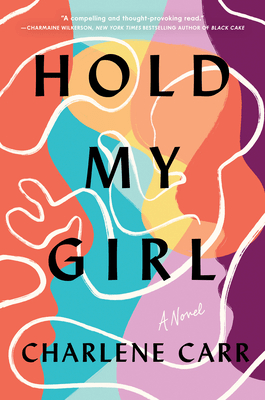
Book Review: Hold My Girl by Charlene Carr

Tess and Katherine are two women who could not be any more different but they have one thing in common, they both desperately want to have a child. Katherine is married and has spent most of her life trying to be perfect, obsessing over her home and family looking perfect. The one thing that’s missing is a child. Tess is recently divorced, estranged from her family and generally unhappy. Both women underwent IVF a year ago at the same hospital. Katherine’s resulted in a baby girl, while Tess had a stillborn.

A year later, Katherine is about to celebrate her daughter, Rose’s first birthday while Tess is still grieving her loss. Katherine, who is biracial (half black/half white) has been harboring a secret fear due to her daughter’s pale skin and bright blue eyes and her fear is confirmed when both women receive a call from the fertility clinic letting them know that their eggs were switched. This starts the story of one woman’s life falling apart while the other thinks it’s a start of a new life for her and Carr takes us on a journey for the battle for Rose.

This book had me thinking hard – in a good way! I really enjoyed it. For me, it was a unique story in that I haven’t read anything with this storyline and that in itself is surprising as it seems like a very likely thing to happen. There were so many layers to the story that I cannot give away without spoilers but I truly kept going back and forth on who has the right to Rose? What makes a mother? One person carried her to term and raised her for a year but the other is biologically her mother.

The author is a black Canadian woman and I expected more in terms of Katherine’s race and how it played into the battle – in court and within her husband’s family. I also wish we got as much of Katherine’s parents as we did of her husband’s family. That being said, Tess was fully developed and we definitely understood every facet of her life and what made her who she is today. Carr did a good job of navigating multiple narratives with multiple characters and also time spans without it feeling bogged down.

While I highly recommend this book, I do want to let you know that there are some trigger warnings with topics of rape and infertility. Ultimately the book is about motherhood. Being able to be one, the journey to being one, the longing to be one when your body betrays you and all the side effects it comes with. This book is definitely one that would be a great one to discuss with others.

Taynement

Black Authors, Fiction, Historical, literary fiction, race

Book Review: James by Percival Everett

“Belief has nothing to do with truth.”

When enslaved Jim overhears that he is about to sold to a man in New Orleans and separated from his family forever, he decides to hide in nearby Jackson Island until he can decide what to do. Meanwhile, Huck Finn has faked his own death to escape his violent father on that same day. This leads to a collision that leads to Jim being wanted for murder and being a runaway. This also leads to a dangerous journey via a raft, down the Mississippi River towards the elusive and unreliable promise of the Free States and beyond.

“At that moment the power of reading made itself clear and real to me. If I could see the words, then no one could control them or what I got from them. They couldn’t even know if I was merely seeing them or reading them, sounding them out or comprehending them. It was a completely private affair and completely free and, therefore, completely subversive.”

I avoided this book for the longest time because I believed it would be too depressing for my state of mind at the time. I went to Barnes and Noble with a friend who bought me a copy of this book and seeing how slim it was, I decided to just give it a go and then couldn’t put it down. Everyone says this is a retelling of Huckleberry Finn, which is a book I’ve never read, so you don’t have to be worried about not getting it if you haven’t read it. I decided to ignore all talks of a retelling and just read the book as its own thing. Even though this book is about slavery and its many horrors, Everett finds a way to make it a great adventure novel that always tried to put the humanity of its characters at the forefront of the novel.

“I did not look away. I wanted to feel the anger. I was befriending my anger, learning not only how to feel it, but perhaps how to use it.”

I don’t understand why the Goodreads blurb of this book calls it “ferociously funny”, there’s nothing funny about this book. I can’t even think of one scene that made me laugh out loud. This book is serious and thought provoking and no, this is not euphemism for boring. It really gives you a lot to think about, especially the power of language, how we use it and how it’s used to empower or colonize a group of people. This is not an easy book to read because lots of terrible things abound and most of these terrible things happen to people because of the color of their skin but Everett’s writing makes it a fast read.

I found this book to be suspenseful and heart wrenching and I gave it 5 stars on Goodreads.

Have you heard about this book? Have you read it? Let me know in the comments what you think about it!

Leggy

Black Authors, celebrity memoir, Memoirs, race, women's fiction

Book Review: Leslie F*cking Jones by Leslie Jones

“You are with yourself every day, all day, all night—might as well like yourself.”

Leslie Jones is a comedian who is best known for her role on SNL for a couple of years. This memoir describes her life – from her childhood growing up in the South with a military father, her early high school and college days playing basketball, her early stand-up days driving from gig to gig and living from paycheck to paycheck to being cast on SNL which came because of a Chris Rock recommendation. I did this book on audio and I’m going to be reviewing this book on audio because I’m pretty sure this book on audio is very different from the printed book. For context, the printed book is 288 pages, the audio is 17 hours of Leslie just telling you, her story. It’s a long podcast filled with streams of consciousness and sometimes she even says – “I don’t think this was in the book but let me tell you about that time when…”.

“My talent can take me anywhere I want to go. I’m not conceited or cocky. I’m just convinced.”

I knew nothing about Leslie before I picked up this book. I’ve never heard any of her comedy and I don’t even watch SNL. I just know her as a public figure who was on SNL. So, I definitely went into this one completely blind about her story. Leslie grew up in the South with very young parents. Her parents got married when they were 18 and tried to do the best they could with what they had. Leslie’s ability to keep moving forward no matter what happened to her is very inspiring to listen to. She talks about her coming to the realization that she was black and a dark-skinned black girl at that and always asking her father if she was beautiful. She talks about hoping that her success will convince people who look like her to just keep going and that it gets better on the other side of being a grown up.

“I remember hearing Diana Ross once say, “Know who you are because if you don’t, they will make you what they want.”

Leslie is a very complicated person. There are a lot of things that I didn’t agree with, but I respect the fact that Leslie was always herself. Win or lose, she was always going to do it her own way and that takes a lot of courage to decide that who you are is enough. Did I listen to some of the stories and think she overreacted? Yes. Do I also think that it’s problematic that I think a dark-skinned black woman needs to tone it down? Absolutely. There is a lot of things living in America makes you internalize, and Leslie has internalized none of that. She tells you story after story of her trying to navigate her career – the things she did wrong and the things she got right. Consistently calling people out who she felt disrespected her because she’s a woman or because she’s black.

“I knew I wasn’t going to have children as far back as when as I was twelve. I am not a pain person. You’re telling me you’re going to pull a whole human out of my pussy? (For a start, I’m going to need more than six weeks off.) We saw a film in health class called something like The Beauty of Childbirth—but all I saw was hideous shit. What’s beautiful about snatching a baby out of a woman’s ass? The fuck? My cousin Rhonda even delivered a baby in our house, and I remember that there was so much blood…
None of this was going to happen to me.”

Leslie talks about her decision to not have kids. The abortions she had before going into planned parenthood for some much-needed sex education so that she could prevent getting pregnant. She was with one of her partners for a very long time and he wanted kids, but she was sure that if she stayed with him, she would be stuck and not achieve her dreams. Also, his mother hated her, and she got tired of the disrespect and left him. But as soon as she got pregnant the first time, she knew she was never going to be a mother. She knows that her mother would be disappointed about her decision to never have kids especially now that she has the resources to actually afford them but it’s a decision she made with clear eyes and has never regretted.

“He’s a grown-ass man. If you don’t watch out, you’re both gonna die—you’re both gonna sink in that same boat.”

Leslie talks about the complicated relationship she had with her father who wanted so bad for them to make something of themselves. She talks about her now deceased brother who was deep into selling crack during the crack epidemic in California. One of her regrets is that none of her family is here to reap the benefits of her success. As she describes her father, you get the feeling that she is hoping that her audience doesn’t judge him too harshly. She talks about how great he was when she was young and how he always told her she was gorgeous but also told her that she is a woman and black and she would have to fight hard to get anything in this world. You can tell that Leslie feels guilty that she chose herself unlike her brother who was stuck trying to take care of an alcoholic father. She was single minded in the pursuit of her career.

“The world’s not going to stop for that shit. This doesn’t define who you are. Don’t make this the focus of your life. There’s always going to be hurt before you get to the right place.”

All in all, I loved listening to this book, and it made me actually laugh out loud. So many times, I would stop and send Tayne a voicemail of something that I found incredibly funny. Like Leslie asking her therapist if she’s promiscuous because she was sexually abused when she was young and her therapist asking her if she’s considered that maybe she’s just a slut. It made me laugh so much because Leslie was like – you know what? you’re right. Anyway, I recommend this book and wish Leslie Jones continued success in all her endeavors. I gave this book 4 stars on Goodreads.

Leggy

Black Authors, Memoirs, Non-Fiction, race

Book Review: How To Say Babylon by Safiya Sinclair

“A book, I soon learned, was time travel. Each page held irrefutable power.”

Born and raised in Montego Bay, Jamaica, Sinclair tells us of her upbringing in a very strict Rastafarian household. She tells us the story of being under the thumb of her dad who was basically a Rastafarian zealot and lived in fear 24/7 that his family would be corrupted by the Western world. So much so, that he kept them away from other people, made them grow dreadlocks, made them dress modestly from head to toe and banned them from so many other things we would consider normal. On the flip side is her mom, who was so smart but so passive and was complicit in her dad’s choice on how to raise the kids. Sinclair walks us through from the very beginning to the point where she began to rebel and begin to discover life for herself.

“The bond between them was as unspoken and unbreakable as the barrier between us.”

Wow guys, not since Sex Cult Nun have I read a memoir that was this mind blowing. And to no one’s surprise, what the two have in common is – religion. Sinclair was able to write an impactful memoir because she understood where she came from. Earlier, when I said the book started from the very beginning it’s because she gave us the background of her parents and we get to understand their individual traumas and understand their motivations to how they became who they were – not that it excused it but we had some kind of context.

“I was still young enough to keep approaching him, a kicked dog slinking back, doing as my mother did.”

The writing style in which Sinclair wrote this book was so good and there was a heavy air of foreshadowing that had you on the edge of your seat as her father became more and more volatile. It almost felt like it was a thriller until you remembered that it is a true life story. The juxtaposition of her father getting more volatile and her mother getting more withdrawn was fascinating especially when you consider that the thing that saved her and her siblings was how gifted they were academically, which you could say they got from their mother. She made sure her kids were well educated and used it to their advantage. Though her mother was complicit in some areas, she definitely scrapped for her children.

“How would I know where to begin? Here, in the same hills that had made my father, now sprung the seed of my own rebellion.”

As fanatical as the dad was, the one thing that confused me was that he did not stop them from going to school and in fact was proud of her accolades even if it came from the Westerners he seemed to despise so much. Since the mom was a tutor, she could easily have home schooled them but Sinclair going to school revealed her poetry gifts which led to her expanding her views on the world and realizing that perhaps there was more than what her father had told her. I will say though, despite all the awfulness, something out there was looking out for Sinclair and her family because things always seemed to work out just at the right time.

“The bond between them was as unspoken and unbreakable as the barrier between us.”

With the way, the book ended it seems Sinclair wanted to focus on just her upbringing and how she broke out of the mindset. It would have been nice to know where the relationship with her dad ended up in detail and I was particularly interested in knowing how this affected her romantic relationships. But overall, this is a memoir that will stick with you for a long time. Besides just telling her story, I learned a lot about Rastafarianism, something I knew nothing about before this. You can tell how much she loves her home land as she described various parts of Jamaica in detail and with love. I am always in awe how people remember so much detail about their lives because I know personally, I remember certain stories in detail but for the most part they are hazy. Though tough at times, I recommend this book.

Taynement

Black Authors, Fiction, literary fiction, women's fiction

Book Review: Sugar,Baby by Celine Saintclare

“I think of Constance’s hushed voice whenever we were cleaning together. Once some things get dirty they can never be clean again and once some things are broken they can never be fixed.”

Agnes is a 21 year old black girl who lives at home with her religious immigrant mother, Constance, and her sister. Agnes is in limbo not knowing what to do with her life so in the meantime, she is cleaning houses with her mother. In between, she is sleeping with a guy who clearly isn’t interested in anything but her body and hanging out with her friend, Jess at clubs. One day, the daughter of one of their cleaning clients, Emily takes an interest in her and introduces her to the world of being a sugar baby. Agnes seems to have found the excitement she was looking for in her life. But as things begin to ramp up, she starts to wonder if it is worth it.

“I can admit it. It feels good to be wanted, to be delectable, delicious. But if I’ve learned anything it’s that I don’t want to be consumed. I have teeth of my own.”

I loved this book so much that I can’t believe it is not being spoken about in every corner of the literary world. This book took me into a world that is not my reality and made me understand Agnes’s decisions. Agnes is poor, doesn’t know what to do with her life and constantly having to endure her mom’s religious overzealousness. She is already sleeping with a no-good guy so what is the difference doing so with people who she is actually attracted to and getting paid for it especially when she wasn’t always sleeping with them?

What does it say about me that I enjoy this, sex with a man who doesn’t respect me whatsoever?

I enjoyed going through the journey with Agnes where she constantly straddled giving in to her lust and desires and hearing her mother’s voice. I also felt happy for her when she got to get all dolled up, visit places she had never been to and afford things for her sister. One of the best things about this book is SaintClare’s writing. It’s hard to believe it was a debut because it was so effortless.(SaintClare is 28). The story truly just flowed even though all the while I kept feeling “this can’t end well”. As Agnes’ journey grew more dangerous (to me) I kept hoping she would be okay as if I knew her personally. Her friendship with her friend, Jess was complicated and I couldn’t tell if SaintClare wanted us to view her as a good friend or a fairweather friend.

“It’s so deeply entrenched in me, the Fear of God, so much more strongly than the belief.”

It’s easy to reduce this book to just one about being a sugar baby but it had a lot more to it. It’s a journey of a young person trying to understand and find themselves, having a complicated relationship with their mother and friends and just trying to find a way out of poverty. There were other side stories which I found interesting as well and loads of graphic sex scenes. The author seems very knowledgeable and insightful about the world of being a sugarbaby which made this book even more interesting to read. If you couldn’t tell, I truly enjoyed this one and I definitely recommend it.

Taynement