african author, african stories, Black Authors, Fiction, LGBT, literary fiction, Nigerian Author, romance, We Chit Chat

We Chit Chat – Blessings by Chukwuebuka Ibeh

“It’s one thing to love a child, but it’s an entirely different thing for the same child to feel loved. A home is the last place a child should feel conditionally loved.”

Leggy: I remember seeing this book months ago on Bookstagram. An Asian content creator popped up on my feed talking about this book and I sent it to you and suggested we read this.

Taynement: Yep! It was a book by a Nigerian author being spoken about by a non-Nigerian and it piqued my interest because something I always talk about is wondering how people who aren’t familiar with the culture digest books about Nigeria.

Leggy: This book follows Obiefuna, who was born into a lower middle-class family in Nigeria. His peculiarities make him the black sheep of his family and when his father finds him in an intimate position with another boy, he ships him off to seminary school.

Taynement: To be clear – his peculiarities to them were the fact that he loved to dance and wasn’t particularly good at sports but in reality, he was gay. Obiefuna was a rainbow baby after his mother suffered many losses. He turned out to be a golden child, and his parents attributed their successes to his birth, and he held a special place in his mother’s heart. His father makes the sole decision to ship him off after finding him in a compromising position with a male apprentice without letting his mother know the reason why.

Leggy: This is one of the best books I’ve read this year. I think what makes it so impactful is how quiet and not exaggerated it is. Every time I thought the author was going to make an outrageous choice he always chose something different. And I think the quiet choices make this book even more powerful because you recognize the characters. You know this would absolutely happen in Nigeria. There’s no exaggeration to pull you out of the story and other Obiefuna’s humanity.

Taynement: Yes, it was very realistic, and I agree that it was quiet and not exaggerated. It’s funny because some other books that I have as my faves this year share those same characteristics.

Leggy: What did you think about his experience in boarding school?

Taynement: I think it was true to form. I chuckled when his dad chose that as a form of punishment because it was almost predictable that he would explore his sexuality there. I would say though that I had my heart in my throat the entire time because I kept expecting him to be raped especially when he built a connection with Senior Papilo.

Leggy: Exactly. I was like sending your son to an all-boys school because he’s gay is a choice. That’s something I loved about this book. I thought Senior Papilo was going to rape him as well but that never happened. The author never made any shocking choices and that choice would have been expected.

Taynement: But again, another reason I liked this book is also showing how flawed our parents’ generation was in parenting. They just did not have the tools. His dad thought he was doing his best. Another way that this manifested in the book is when Uzoamaka (Obiefuna’s mother) visited the hospital with Anozie (Obiefuna’s father) and the nurse makes the comment about him being a good man because he accompanied her to the hospital when most men wouldn’t. Anozie loved his family, and he was showing up for his wife.

Leggy: I do believe Anozie genuinely loved his family. He even tried to hide the fact that he found out Obiefuna was gay from his wife because he thought it would break his wife’s heart. When they finally had the discussion in the open and she told him where else would a boy like him be loved if not at home?

Taynement: I do think certain threads were left loose or maybe I did not pick up on their usefulness to the story. The two most prominent were – Ekene’s (Obiefuna’s brother) plot purpose and when Senior Papilo takes him to a brothel.

Leggy: I think Ekene served as a juxtaposition to Obiefuna.

Taynement: I get that, but I don’t know if it was well done. The juxtaposition didn’t seem to have any effect on Obiefuna? Basically, if he was left out of the story would it have affected my understanding of Obiefuna?

Leggy: It was because of him that Obiefuna even came in contact with any traditional masculine things. He would have never gone to the football field if Ekene did not exist. Also, even though Ekene was not that smart he was left in the private school while Obiefuna was moved to seminary school because of his gayness leading the private school to have a meeting with Uzoamaka inquiring why Obiefuna was moved.

Leggy: I also expected Obiefuna’s brother to turn on him at some point because he was portrayed as so macho and being complete opposite of him, but they actually stayed closer than I expected them to. When Obiefuna comes back from holiday and Ekene sings for him to dance. I thought that was such a touching scene.

Taynement: The scene where he tells Obiefuna to dance, do you think it was him acknowledging it? Ekene just seemed to be in the dark about a lot of things.

Leggy: I absolutely think he knew. And I think that scene was a way for him to acknowledge it without having that conversation especially from someone considered traditionally masculine. He was never going to confront it head on.

Leggy: Also, about Senior Papilo taking him to a brothel, honestly, I thought Papilo was gay the way he gathered all those young boys to himself, the way he treated them and the way they competed for his attention. So, when the brothel happened, I was confused. I was actually relieved that the boys just went to a brothel. I genuinely thought they were leaving the school to do something more sinister like armed robbery and that Obiefuna was going to get caught up in it. I was so relieved that that wasn’t the case that I didn’t even think about the brothel anymore. But I think it speaks to how straight men initiate younger boys into what they believe manhood is.

Taynement: Interesting. I do think Papilo is gay but wasn’t going to “give into it”. Papilo is one of those Nigerian men who will marry a woman and live a straight life and a part of me wondered if he was giving Obiefuna an out by taking him to the brothel.

Taynement: And something that struck me was up until the end of the book had Obiefuna actually had sex? He mentions touching and rubbing and we never really going into the nitty gritty of his relationship with the artist.

Leggy: They never described his actual sexual relationship with the artist. Only that he did a lot of drugs with him and I was so worried because obviously Obiefuna was depressed and grieving and I was worried about the path he was heading down. But he never had actual penetrative sex with the long-term boyfriend that comes after the artist.

Taynement: Overall, I think that is the beauty of this book. It was written so well, and it maneuvered from topic to topic so deftly and the story just flowed.

Leggy: This book culminates with the 2014 law that criminalized gay relationships with a hefty 14-year sentence. That was devastating to read about.

Taynement: It was a good balance of reality. I liked the fact that Obiefuna found a community because they do exist in Nigeria.

Leggy: And then when one of his friends was kitoed. By the way, this is an actual thing that happens in Nigeria and that’s when straight men pose as gay men on dating apps to lure gay men out and then they get beaten up, videos are made of them confessing to be gay and then they are robbed while law enforcement looks the other way.

Taynement: All in all, this was a fantastic, well-written book that I thoroughly enjoyed.

Leggy: Such a fantastic book. I loved it so much and it was an easy read.

african author, african stories, Black Authors, literary fiction, Nigerian Author

We Chit Chat: Dream Count by Chimamanda Ngozi Adichie

“I’m growing old and the world has changed and I have never been truly known.”

Leggy: I finally finished Dream Count. What were your overall thoughts?

Taynement: Definitely not the best we’ve got from Chimamanda.

Leggy: I found the book very disjointed. I have a feeling these are half written characters from her years of writer’s block, and she just made them fit together.

Taynement: For me, I believe the real story she wanted to write was Kadiatou’s story, but it was too close to reality (as it’s based on a true story) and she fit the other stories around it. Kadiatou’s story was distinctly different, and her entire authors note was about Kadiatou’s story.

Leggy: The funny thing is that I was really into the book till I got to Kadiatou’s story and it knocked me out of my rhythm. But I must admit, once I got my bearings, I appreciated it for what it was. Honestly this book felt like a collection of short stories.

Taynement: I think another thing was I recently read Purple Hibiscus, and I couldn’t help but compare the books. While I think Chimamanda is verbose, I give her a pass because this is how she actually speaks.

Leggy: Yeah, I didn’t mind the writing. There were some lines I actually really loved but I completely understand why you find her verbose. Sometimes it’s like do we really need that metaphor there? What did you think about the characters? I liked Zikora the most and I found Chiamaka very annoying and foolish.

Taynement: I was so excited to dive into the many characters, but I found them to be unlikeable. I liked Omelogor’s directness but after a while it just became obnoxious. Zikora had the most depth as a character given the relationship with her mother.

Leggy: I liked Omelogor at first too then I just found her annoying. I also find it very hard to believe that anyone born and raised in Nigeria is going to ever get a Masters in Pornography. Also, her “Dear Men” website never made sense to me. But I really liked her bank story.

Taynement: I think that’s another thing. This book was about women’s dream count and getting closer to their dreams of finding a partner. I wonder if it was intentional to have such shitty men and have these women not find their partners. I’ve seen criticisms that the book is male centered but I’m okay with that because I think it’s okay for women to have the desire to be partnered.

Leggy: I also think that there is no such thing as a Nigerian woman who has successfully decentered men. Because at the end of the day, the society still makes sure your life revolves around them. Even Omelogor who didn’t care about being partnered was still forced to contend with being single because everyone (both her family and friends) reminded her she was single and childless. Her aunty wanted her to consider adoption since she has passed the age of marriage and childbirth even though she never even wanted marriage or kids ever. The society doesn’t let you have a life that doesn’t center men and anyone who says otherwise is living in a fairytale. I’m so tired of people thinking fiction should depict a reality that is aspiration instead of a reality that is.

Taynement: Did you find Omelogor’s sexuality vague? Also, I feel like the ladies’ relationship traumas were had to get behind without an understanding of how we got here. I had no idea why Omelogor couldn’t be in a long-term relationship and had an end date for each man and don’t even get me started with Chiamaka going for low hanging fruit men and leaving the one good man.

Leggy: I didn’t question Omelogor’s sexuality because at that Abuja party if Omelogor wasn’t a 100% straight she would have indulged but she never did. I also think there are people who really can’t be in a long term relationship. I never thought that had anything to do with a trauma. As for Chiamaka, she had an idea in her head as to what love is, that most Nigerian men could never live up to. She admitted at the end that she should have tried harder with Chuka. I would have married him but I think I understand why she sabotaged herself. Someone like her that’s always travelling and thinks she’s so different would have detested the idea of settling down with the very type of person every conventional person was settling with.

Taynement: But she had less with the non Nigerian men so what was the idea?

Leggy: I think Chiamaka was chasing an idea of love that doesn’t exist.

Taynement: Something I asked myself while reading this book is why when a character has a belief, I think it’s a mouthpiece for what Chiamanda is thinking, but I don’t think this way for other authors.

Leggy: Lmaooo. Probably because we don’t personally “follow” other authors. Most authors I like I don’t even know what they look like. I’ve been hate-reading Sally Rooney for years and I’ve never even googled her.

Taynement: Like you said at the beginning of this, I think the biggest flaw of this book was it being disjointed and uneven. I feel like I don’t have a full understanding of the motivations for Chiamaka, Zikora and Omelogor but I completely understood Kadiatou. Chimamanda says it was a mother-daughter story, but I thought Kadiatou and Binta’s story felt secondary.

Leggy: I didn’t get the motivation for the three girls too and I thought there’d be more connections with their stories. But they stayed in their different pockets and barely interacted throughout the book. I wish I had Chiamaka’s life though. I want rich parents who let me travel. I’d date better men though.

Taynement: Yes, a clearer direction for the book would have been focusing on their dynamic. There was already meat there with Zikora and Omelogor. Zikora was so intimidated by her that when she had a breakdown about being single, her one ask to Chia was “don’t tell Omelogor”.

Leggy: Exactly. That’s why I think these are all independently developed characters that she put together, but I think now that she’s done with the cobwebs of her writer’s block, the next one is probably going to be great. I have faith in her.

Taynement: Do you think the America criticisms were heavy handed?

Leggy: Absolutely, very. Especially coming from someone who lives in Abuja and participated in money laundry. That’s the part of the book where I thought was Chiamanda talking. I think it was the after-effects of the backlash she received some years ago, from people who found some of her comments to be transphobic. She felt like it was her own people cannibalizing her and I think that whole section was her rage at that incident.

Taynement: Overall, we can’t take away from Chimamanda’s writing. I liked how the book stayed very Nigerian. I could see the vision, but the execution was rocky. I think we were left with a lot of whys and not in a Kainene type of way.

Leggy: I debated giving this book 4 stars because I actually liked the writing and the individual stories but ultimately, I settled for 3 stars because I just think the overall book was not well executed.

If you have read the book, what did you think?

Taynement and Leggy

african author, african stories, Fiction, literary fiction, Nigerian Author

Our Best and Worst Books of 2023

“Tis the season where we round out our faves and not so faves of the year. Without further ado, here we go:

Taynement’s Best:

“How do you know if you’re genuinely happy or if you’re just mostly all right, with sprinkles of laughter and occasional shit storms of sadness?”

It’s so funny that this ended up being my favorite book of the year because when I started, I was so irritated by Maddie’s mom and feeling so bad about Maddie’s situation. By the time the book ended, I knew it would be my favorite read. I best describe this book as well rounded and very well written. You feel like you know Maddie. You can see my full review on this book here.

I had a good reading year and liked most of my reads. I read Purple Hibiscus for the first time and what a book! I didn’t include it because it’s old. I also liked as usual my reality show niche books.

Here are some of my other faves:

  • Yellowface by R.F Kuang (love me a book that makes me think. Full review is here)
  • Wellness by Nathan Hill (a real life depiction of a couple’s marriage and how their childhood played a part. Really liked this one)
  • My Last Innocent Year by Daisy Alpert Florin (another one that made you think. Full review here)
  • Rootless by Krystle Zara Appiah (Everyone I know hated the ending but it made sense to me. Our chitchat on it here)
  • Everything Is Fine by Cecilia Rabess (Such a complicated read and annoying character but truly enjoyed this one)

Leggy’s best:

“The power to protect is the highest of responsibilities, Diago. When a man is given it, his duty is not only to the people he thinks are worthy.”

I reviewed this book on our Instagram page. We do mini reviews over there during the week so follow us at @nightstands2. Anyway, I remember reading this book and just loving it. I would read a particular exciting chapter and immediately reread it at the end.

Vic Telimus enters the a powerful academy and uncovers the layers of mysteries and world changing secrets that are way bigger than his quest for revenge, bigger than his family and bigger than what he ever envisioned. I love fantasy books with heros who you want to root for and revenge stories are my kryptonite.

Here are some of my other faves of the year:

  • Tomorrow, and Tomorrow and Tomorrow by Gabrielle Zevin
  • Blood Over Bright Haven by M. L. Wang (full review here)
  • Drowning by T. J. Newman (I reviewed this on our Instagram!)
  • Everything Is Fine by Cecilia Rabess (full review here)
  • The Measure by Nikki Erlick (Full review here)

Taynement’s Worst:

After much thought and deliberation, it pains me to say that this was my least favorite book. Upon reflection on this book, I don’t know if it had a redeeming quality. It tried so hard to be different. From the characters not having a name, no punctuation, vague ending. I did not have any positive feelings when I was done. Full review here.

Leggy’s Worst:

This is basically a book where the protagonist is hung up on a relationship she had when she was 17 for one summer. She saw this boy every summer from 5 to 17 but they only had an actual relationship for one summer that she never got over even though our protagonist is now 31. I could not get over this premise and it colored the entire book for me in a bad way. I still gave this one 2 stars. I did not give any book 1 star this year. At least not yet.

We hope you have enjoyed talking books with us this year. We’d love to know what your best and worsts were so, let us know in the comments! Have an amazing Christmas and we’ll see you in the New Year. Happy reading everybody!

Leggy & Taynement

african author, Fiction, literary fiction, Nigerian Author

Book Review: The List by Yomi Adegoke

Ola is a well known journalist who writes for an online magazine. She is engaged to Michael, who is a former podcast pro and about to start a new career. The two are what the kids call “Couple Goals”. She is also an outspoken feminist and makes her voice loud and clear on social media. She is the first to believe women and call out badly behaved men. Ola is knee deep in wedding planning and everything is going well until 2 weeks before the wedding, their whole lives are turned upside down.

A list has been shared on Twitter. It’s an anonymous list that consists of men accused of varying degrees of sexual assault or inappropriate behavior. Michael is on the list. Suddenly Ola finds herself having to put money where her mouth is. Does she cancel the wedding this close or is this a set up from a disgruntled woman from Michael’s past?

I thoroughly enjoyed this book because of how realistic it was. It’s very easy to spout “believe women” when it is hypothetical but what would you do when it hits home directly. I like how Adegoke depicted Ola’s turmoil between doing what she would have done and grappling with not being able to reconcile the accusation with the Michael she knows.

Adegoke was able to weave past back stories and really flesh out Ola and Michael’s lives separately so we get a good picture of the characters we are following. I liked how Adegoke kept the friends as supporting characters that moved the story along but never overtook or felt like an unnecessary storyline.

On the flip, sometimes the book leaned heavy into being social media buzzy. What do I mean by that, you ask? Well, it had a heavy social media emphasis and at some point it seemed like she was speaking social media language to appeal to that audience. I didn’t mind it so much because I think that was part of what Adegoke was trying to convey, the pressures that come with that world.

I am not sure how this would be received by sexual assault survivors because in some way, it provided an out. The fact that the list was anonymous and unverifiable and anyone could add to it made it seem like it couldn’t be taken seriously. The twist at the end was interesting, to say the least.

Overall, I did like the book but I feel like it would be a divisive one where you either really like it or you don’t. If you have read it, I would love to know what you thought about it. Let us know in the comments!

Taynement

african author, african stories, Fiction, literary fiction, Nigerian Author

Book Review: The Three Of Us by Ore Agbaje-Williams

“He sees what I see, but from the other side. A woman in between two selves, undecided as to which she can remain loyal”

The premise of the book is pretty simple. There is a wife who has a husband and a best friend. The best friend’s name is Temi (that’s the only name we get). Temi and wife’s husband hate each other and wife is in the middle seemingly not trying to take sides. The book is basically the telling of one night where the three of them hang out in Wife’s house, drink too much and let their bubbling resentments spill over.

“Doubt and truth are so close that it’s sometimes impossible to tell them apart”

I can’t tell you that I knew what direction the author was trying to take besides trying something different. The book had no quotation marks, paragraphs and like I said no character names – save for Temi. If I wanted to reach, I could say that the intention was to say that Temi is the only one with a strong identity but I am not going that far.

I have written before about whether it is possible to like a book with unlikeable characters. I say this because of the way I could not stand these three people. Temi because why are you so intrusive in someone else’s marriage even if they are your best friend? Showing up at all hours to their house and never leaving and judging her friend’s choices like choosing to get married. Wife because why the hell is your friend that involved in your life and mocking your husband and you join in laughing at him? and Husband for putting up with the shit and having low key misogyny.

The book reads like a novella and a thriller except I wouldn’t say I found it thrilling. It was like a thread just unraveling without any building excitement and instead building annoyance. Temi and Wife became friends because Temi “saved” Wife from the rules put on her by her Nigerian parents. But the irony is, Temi seemed to pick up where Wife’s parents stopped and wants to dictate Wife’s life and Wife lets her.

I couldn’t tell if Temi loved Wife romantically or if she loved Husband romantically. And I couldn’t tell if Wife even loved Husband (well technically we got the idea she wasn’t in love with him). My conclusion is that Agbaje-Williams wanted this book open to interpretation and each character represented something in society. The depiction of Nigerian culture was accurate though.

Overall, I think the book suffered from being a novel that came off as a short story. But the thing is, I can’t definitively say it didn’t work because I am sure there is an audience for it. I can admit being biased because the characters were so unlikable to me. I really hated the ending, and I couldn’t even believe that was the end. Since it’s a short book it’s one I’d say it wouldn’t hurt to read for yourself and come to your own conclusion.

Taynement

african author, african stories, Fiction, literary fiction, Nigerian Author

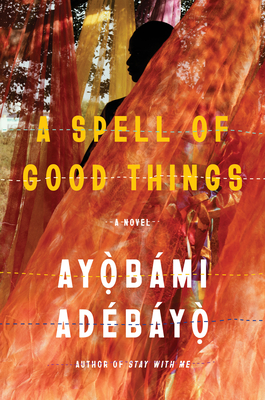
Book Review: A Spell of Good things by Ayobami Adebayo

“Now hear me well—what is not yours is not yours o, even if you marry the person that has that thing. If it is not yours, it is not yours o.”

When Eniola’s father loses his job, his life becomes a series of unfortunate events. His family goes from a 3 bedroom apartment to a studio apartment for all 4 of them – his dad, his mum, Eniola and his sister, Busola. His dad falls into deep depression leaving his mum to cater for the entire family. Eniola tries to help his mother by running errands for the local tailor, begging on the streets and being as good as possible to avoid causing his parents any grief.

Wuraola is a beloved child of a rich renowned family. She’s a doctor doing her residency program and also dating Kunle, the son of an equally wealthy and ambitious politician. As they get engaged and their relationship becomes more volatile and violent, Wuraola is trapped between not shaming her parents and loving Kunle out of his madness.

When Eniola’s parents are forced to make a hard choice between educating him or his sister and a local politician takes an interest in him, it leads him down a path that leads to the destruction of two families.

“He stared back at her, unconcerned. She had always marvelled at his calm assurance that everything good in his life would either remain the same or get better. He took good fortune for granted. As though it were impossible that it would abide only for a spell. She had never been able to shake the sense that life was war, a series of battles with the occasional spell of good things.”

A Spell of Good Things delves into class privilege, politics, poverty, familial and societal expectations in Nigeria. We were introduced to Adebayo with Stay With Me and she doesn’t disappoint with her second book. Reading this book right after the recently concluded Nigerian elections and seeing the parallels really made me sad. Local politicians collecting young, barely teenage boys and turning them into murdering, kidnapping and election box snatching thugs for their own political ambitions and never giving them anything in return besides drugs, food and money.

This is a familiar story for anyone who grew up in Nigeria where our politics is extremely violent. It was so sad to see Eniola’s path to the eventual climax of the book and because we got a lot of his family’s history we can’t help but understand why he took the only option he had at that point.

“What if everything that is to happen has already happened, and only the consequences are playing themselves out?”

This book needed a better editor to tell Adebayo to hurry it up. The narrative started out meandering. I kept wondering where the book was even going. It took way too long for the narrative to start moving. We got so many unnecessary scenes that I personally felt added nothing to the story. Adebayo would spend so long describing things that added nothing to the scenes and I was fascinated that an editor didn’t ask her to cut them out.

When the narrative picks up, it really does but then it leads to such a saturation of events in the latter half of the book that could have been spread out and would have made the book much stronger than what we got. I also think that while I entirely sympathized with Eniola, I was very indifferent to Wura. Stay With Me packed such a punch and was such a delight to be immersed in and made you care about every single person in the book but unfortunately, that is not the case here.

My favorite character ended up being Wura’s mother whose story I found so interesting and would have loved to hear more about. How her elder sister raised the rest of them and sacrificed so much to ensure they all married rich men and all became first wives and then continued ensuring that they never had to depend on a man for the rest of their lives. It was amazing to read and every time Adebayo focused on her, I gobbled it all up.

“Time was unforgiving, it didn’t stop, not even to give people a chance to scrape themselves off the floor if they’d been shattered.”

I still definitely recommend this book despite some of my concerns. I think it’s a good story and I can’t wait to continue seeing where Adebayo’s career goes from here. I gave this book 3 stars on Goodreads.

Leggy

african author, african stories, Fiction, Nigerian Author, short story, We Chit Chat

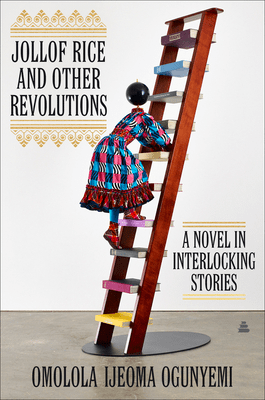
We Chit Chat: Jollof Rice and Other Revolutions: A Novel in Interlocking Stories by Omolola Ijeoma Ogunyemi

Leggy: You chose this book for us to read. How did you first hear about it?

Taynement: Roxane Gay, the author, had read it early before its release (like 6 months ago) and had given it a positive review. I saw “jollof” and I was intrigued.

Leggy: It took a lot of coordinating for this to check out to both of us at the same time. I thought it was a novel, I didn’t know it was a series of short stories.

Taynement: As did I. Although, I had a tiny feeling with the interlocking stories in the title. I’m not usually a fan of short stories but I think I’m coming around.

Leggy: They’re easy to read because you can commit to a couple of stories a day and before you know it, you’re done. What did you think about this book overall?

Taynement: I think it was decent. Didn’t love it but didn’t hate it. There were elements I liked but I think it just never crossed the mark to really good.

Leggy: Yes, I kept waiting for it to get good but it never did for me. I think a lot of stories had potential but there was a lot holding them back. I kept waiting for her to go further but she never did. Honestly, a lot of the stories were so amateur hour to me.

Taynement: Ha ha, that’s the word. It was like playing dress up.

Leggy: What were the purpose of the dates? The dates seemed pointless to me.

Taynement: I did like that the stories had characters that were connected.

Leggy: We start off with the story of Adaoma, which I thought was all for nothing because after all the dressing up and making you feel it was building up to something, the ending was so anticlimatic.

Taynement: I think it was cool that it was a descendant of Nonso because I think they casually mentioned how her grandmother was married to a woman. I remember thinking the Segun story was pointless but later realizing he was the husband of one of the three main characters (Remi).

Leggy: The story I really liked and thought made sense was Mama Solape’s story. Everything made sense to me. The arc of the story was well done. The way her daughter was completely erased and how people just stopped calling her Mama Solape. How much she fought to retain her daughter’s memory and then at the end naming her restaurant Mama Solape. It was a full story arc to me which I would have loved to see more of, in this book.

Leggy: I didn’t like the last story and again back to the dates. Aisha claims she’s 78 in 2050 but in another story earlier in the book, she mentioned that she finished undergrad in 1994. How is this possible? I think that’s why I hated the dates.

Taynement: Lol. You’re really stuck on the dates. I didn’t even notice that.

Leggy: Numbers stick in my head. I really can’t help it.

Taynement: I actually liked the last story. I enjoyed the futuristic nature of it. I’m always fascinated by how authors imagine the future.

Leggy: What was your favorite story in the book?

Taynement: My favorite story is very random but it was Area Boy Rescue. Maybe because it was from the point of view of a non recurring character.

Leggy: I really liked that one too. When she said her madam dey act like “somebody who head no correct”. To go from her being such an Americanah to moving back to Nigeria and chasing a lorry through the streets of Lagos. That was funny.

Taynement: A very tiny thing but when she admitted that she liked having sex with her madam’s boss. I wasn’t even mad at her. It made me laugh.

Leggy: I really liked that detail. I thought it was succinct and well done because everything is not black and white. There are shades of gray. I think my favorite story was Start Your Savings Account Today, about Remi and her father. That conversation she had with her father and her father was saying – “You think I don’t love you and I paid your school fees in dollars?”. Because that is such a typical Nigerian dad thing to say. Even though you only saw me 7 times after I divorced your mother, I paid your school fees and that proves I love you.

Taynement: Overall, there were bits and pieces I liked and I would recommend it to people but my con is that it was mid.

Leggy: It was okay to me. I gave it 2 stars on Goodreads.

Taynement: I enjoyed it more than you did. I gave it three stars. I think the writing shortcomings were able to hide behind being a collection of short stories.

Have you guys read this? If yes, what did you think? If no, are you going to give this one a try? Let us know in the comments!

Leggy & Taynement.

african author, african stories, Fiction, literary fiction, Nigerian Author, romance, We Chit Chat

We Chit Chat: Honey & Spice by Bolu Babalola

Taynement: Hi, Leggy. It’s been a minute since we did one of these.

Leggy: Yup. I’m excited to discuss this one.

Taynement: We do a lot of chitchats on African authors because we’re excited to support their work but it also makes it more difficult to review. So what were your thoughts on this book?

Leggy: This book was the most exhausting slog of a book I’ve read this year. If we weren’t committed to this blog and to this ChitChat, and I was reading this just for pleasure, I would have DNF-ed it.

Taynement: Oh dear, it was a journey of a read for sure.

Leggy: I was actually quite excited to read this one. When we reviewed her previous book, I said that I was super excited to see what she would do with a long form romance book. So, I was going to pick this one up regardless of the blog.

Taynement: Everyone knows my stance on romance, so I can’t say that I was excited. More like I was preparing myself. You started before me and you told me you didn’t think I would make it.

Leggy: Once I started and it was hard for me, a rom com lover to get through it, I knew it would be even harder for you. First of all, this book read like a Dear White People fan fiction to me.

Taynement: Agreed. So here’s my thing, when I say it was a journey what I mean is the beginning was a struggle and then the book settled and then it became quite corny.

Leggy: The crux of the book is the fake dating trope and it should have started way earlier in the book. It started 35% into the book and I was already bored and restless when we got to the actual romance between them. If the editor had insisted that this book center the actual romance 100%, it would have worked better. Too much was going on in this book for me, story-wise.

Taynement: My problem with this book was the writing style. I say this a lot about African authors but they never let their words breathe. Instead, they wield them like heavy chains. I think Babalola overwrote a lot of the stories/scenes. So, it felt like playing dress up and imagining what people would say while also jam packing it full of clap backs/quips that are supposed to be clever, chockful of current slang but it fell flat. I’ll give an example: “My heart had never been compelled into competitive sports by boys and yet here it was acting like an Olympian, beating like its name was Serena.” Sheesh!

Leggy: Oh God, don’t get me started on how verbose this book is. I see your example and I raise you an even more overwritten passage: “The smile he gave her was mainstream, pop, radio-friendly. The smile he’d given me was the single released after an artist had established themselves, found their voice, could speak directly to their target audience. The smile he’d given me had more R&B to it.”

Taynement: Lord!

Leggy: I think the best lines are those that are profoundly quite and simple. It felt like the author wanted to show us she could write but these over written passages made me roll my eyes so much.

Taynement: Another thing, which I can’t really knock her for, is that she’s clearly proud to be African. So this book was very clearly African – more Nigerian/Yoruba but I couldn’t stop wondering how every black person on campus seemed to be African?

Leggy: Did this book read very American to you despite the number of British slang thrown in there?

Taynement: I was just about to bring that up! I don’t live in the UK but a lot of the language and events seemed…American? For one, not to be stereotypical but there was a lot of coffee drinking when I was expecting tea, lots of “ain’t”, even the Malakai police story read American.

Leggy: The debating All Lives Matter vs. Black Lives Matter storyline seemed very American. Also, wasn’t this literally a storyline on Dear White People?

Taynement: These events didn’t help with the feeling that this book was trying to pack in relevant pop culture tropes to make it current. I spoke with my sister-in-law who lives and went to school in the UK and she said the school experience in the book definitely felt more American, so I was glad I wasn’t being too critical.

Leggy: This book was written for twitter.

Taynement: Yes!!

Leggy: That’s all I kept thinking. This is such a twitter inspired book.

Taynement: That being said, she tied in the honey and spice theme well and I did enjoy when Malakai and Kiki fell in love, I think she allowed the book to breathe then. It felt organic.

Leggy: I wish this book could have been purely about Malakai and Kiki falling in love. Take out the race issues, take out the guy she was sleeping with, have the high school best friend expose her as a “fraud” feminist. Then they break up, get back together and live happily ever after. I think the mistake a lot of authors of rom coms make is trying so hard to make their book deep. Your book is just as worthy as just a love story! Love stories are amazing!

Taynement: I did like the friendship stories. Aminah and Kofi being in love but working for it.

Leggy: Yes! Classic sidekicks which every good rom com needs! This book could have been great. If I was her editor, I would have told her to strip it. Stop over writing. You already have a book deal, we know you can write. Just tell us a good story!

Taynement: I think an observation I’ve made lately is authors seem to be writing for a book to screen adaptation.

Leggy: I thought the same thing about this book. It was really giving American high school movie. Everyone in this book read super young to me even though they were adults in college.

Taynement: I felt like it veered between YA and romance which was a mind trip because I know they’re in college. As a romance reader, was the climax of the book – them professing their love on par with other romance books? Because that felt like a lot! I found it super corny.

Leggy: Yes! It’s always corny but I think what makes it good corny in a well written romance book is that the rest of the book is so good and has made you so invested in the couple that you’re left smiling at the corniness of it all. The one in this book just made me roll my eyes and leap for joy that at last, the trial that was this book was over!

Taynement: Overall, we’d never say not to support a fellow Nigerian but bias aside, this was not a well written book.

Leggy: I would not recommend this book. I did not enjoy it. But if you’re interested, knock yourself out!

Have you read this one? What did you think? Let us know in the comments

Taynement & Leggy

african author, african stories, Fiction, literary fiction, Nigerian Author

Book Review: Dele Weds Destiny by Tomi Obaro

“That Enitan never got a nickname was a slight she was used to. ‘You attract beauty,’ a boy had told her once, but he had meant this quite literally; she attracted beauty only in the sense that she herself was not beautiful but her two best friends were.”

Funmi, Enitan and Zainab are close friends in Nigeria who met in college. Three women with three different personalities. Funmi is outspoken and brash, Enitan is reserved and Zainab is the pretty one who is also reserved. Life and time happens and the three go from inseparable to their separate ways and are about to be reunited after 30 years for Funmi’s daughter, Dele’s wedding.

Their lives are completely different now. Enitan is about to be divorced from the American man she eloped with and she has to deal with her daughter, Remi who blames her for it. Funmi is married to a wealthy man who pays more attention to his phone than Funmi and Zainab is now caretaker to her husband who has had a series of health issues and is relegated to a wheelchair.

“The ways to die were endless. That’s why you had to live, and live ferociously, and often selfishly and exploitatively, but Funmi did not worry herself about these details. Thinking about life’s unfairness was a fool’s errand. It paralyzed you. It was best to count your blessings and keep it moving.”

I enjoyed this book because it tackled things that were relatable – friendships, death, Nigerian culture, the ebbs and flows of life and more. Obaro did a good job of making this debut effort her own and I appreciated it. It didn’t read like she was trying to pander. I enjoyed the storytelling choice of going back in time to explain the origin of their friendship and all they have been through in the past while also giving their points of view in the present tense with Dele’s wedding as the axis. It didn’t get complicated and was very easy to follow.

In going back in time, I truly enjoyed each woman being fully fleshed characters with full stories. We understood how they became who they were, based on their childhoods and upbringing. I also enjoyed how Obaro infused the political climate and protests from that time period because it infused some Nigerian history while not bogging down the story.

What I did not understand was why the title of this book was called “Dele weds Destiny” when majority of the book truly had nothing to do with Dele. As mentioned earlier, it served only as a plot point that brought the women back together. In fact the main conflict Dele felt was never addressed and the minute it was brought to the light, the book ended. That was annoying. The abruptness of the ending just felt rude. I did not see it coming.

There were a number of loose threads all around the book. I don’t think we got a clear picture of how Zainab feels with life as a caregiver now, Dele wasn’t fleshed out and neither was Remi. Granted, you can’t touch on everything and everyone but don’t introduce them if they have nowhere to go. Overall, it was an easy read and a good book on friendships and the ebbs and flows of life.

Taynement

african author, african stories, Book Related Topics, Fiction, Nigerian Author, short story, We Chit Chat

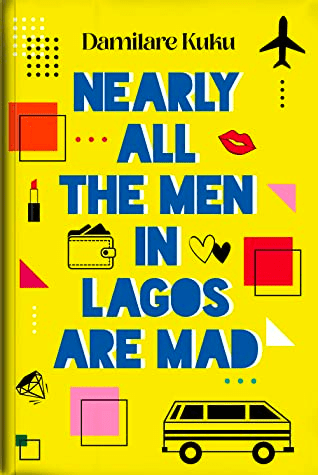
We Chit Chat: Nearly All the Men in Lagos are Mad by Damilare Kuku

Leggy: The title of this book makes me laugh every time I say it. “Nearly all the Men in Lagos are Mad”. It’s such an eye catching title.

Taynement: Ha ha ha, why? Because it’s true? 🙃

Leggy: I mean…This book wasn’t in my library, so I was just going to skip it but you convinced me to get it so we can read it as a part of our Chit Chat series and I must say I don’t regret it.

Taynement: It was on every Nigerian bookstagram and a friend of mine got it for me. I’m glad you didn’t regret it. I enjoyed this book, which is saying a lot given my stance on short stories.

Leggy: I enjoyed it too. I thought it was super entertaining but I also went in with very low expectations. I just thought it was one of those books where everyone jumps on a bandwagon and it wasn’t going to give what it was supposed to give.

Taynement: Besides the compelling stories and compelling writing, what made this book a good read was knowing that all of the stories were realistic.

Leggy: I have a very different opinion.

Taynement: Let’s hear it!

Leggy: I did not find a lot of the stories realistic.

Taynement: ooooh, really?

Leggy: Sometimes I wondered what society she was writing about. Don’t get me wrong, Nigerian men are mad and the encompassing stories are realistic but some of the little details give American society.

Taynement: Oh ok, I see what you mean.

Leggy: Like in “The Anointed Wife”, the mistress gets a book deal and goes on an interview tour. That would NEVER happen in Nigeria. Ever. Especially when the man being accused of adultery is a pastor? She would be branded a harlot through and through. People would talk about it on twitter for a day, nobody will remember the pastor the next day but best believe they’ll always remember the woman to call her – ashawo.

Taynement: I think that’s where you have to suspend all belief to keep the story moving.

Leggy: Yeah, so little details like that made me roll my eyes because it was giving America not Nigeria but overall, I found the main threads of the stories true to form.

Taynement: Did you have any favorite stories?

Leggy: I really enjoyed “Ode-Pus Complex” because I found it realistic. That exact scenario has happened to someone I know.

Taynement: What a clever title. If you’re not Nigerian, “Ode” means fool.

Leggy: Yup. Such a clever title. And honestly, I didn’t hate the mother. She was direct and honest instead of doing that passive aggressive thing Nigerian mothers do.

Taynement: She was just being realistic and quite frankly, saving the girl.

Leggy: And the girl saw it for herself like woman, you can keep your son.

Taynement: One of my favorite stories was “Beard Gang” – the group of women married to closet gay men.

Leggy: I really liked that one too.

Taynement: I also liked “I knew You“, one of the few stories from the male perspective and acknowledging that he ain’t shit.

Leggy: He really wasn’t shit. I’m glad the girl was like – I’m out!

Taynement: I didn’t read reviews for the book but a friend let me know that Nigerians were up in arms about the sex scenes which were graphic. What did you think about it?

Leggy: I don’t remember any of the sex scenes to be honest, so it can’t possibly have been that graphic.

Taynement: Oh wow. Ose bad gyal! 😂😂😂😂 Well, I didn’t think it was inappropriate or too much but I know Nigerians are gonna Nigerian. In fact, I applaud a Nigerian author for not shying away from sex.

Leggy: Also, considering how much Nigerians have sex, it’s intriguing how much they don’t want that fact acknowledged. Which was your least favorite?

Taynement: Cuck up was up there. It was the story that most embodied what I hate about short stories. It felt incomplete and I didn’t get the point.

Leggy: Aww really? I didn’t mind that one. He convinced her to have sex with her rich customer and then started punishing her for it after the fact. Then had the guts to call a family meeting for her, in a house her “prostitution” got them. So she waited for the meeting, told them the full story and then asked him to leave her house for her. I quite enjoyed it.

Taynement: To be honest, I didn’t hate any story. It was a really good collection.

Leggy: I didn’t like Catfish.

Taynement: Ha ha, I didn’t mind it.

Leggy: Also was iffy about The Gigolo from Isale eko.

Taynement: I agree.

Leggy:mAlso, First Times had the cringiest sentences – “Hi, I’m Belinda but Idris calls me baby.” What? I thought the story had potential but she just couldn’t make the plot move forward in a grounded and realistic way.

Taynement: The two stories where the ladies weren’t so smart rank low for me – Sidelined and First Times.

Leggy: You know the one that made me laugh? International Relations. Honestly, this was a really good collection and very easy to read. Did you read her acknowledgment where she thanked Chimamanda Ngozi Adichie? She said she went to a reading at 16 and Chimamanda told her to take all the time she needs to write her first book and she hopes she reads this and It makes her proud. That was really sweet.

Taynement: Yes! There was also a shout out to a We Chit Chat alum author – Chiemeka Garricks.

Leggy: I’m glad older and more accomplished Nigerian authors are providing much needed mentorship for the young upcoming ones. Anyway, I definitely recommend this book. It’s very entertaining and it would make for plenty of fun discussions if you read it in a Nigerian book club.

Taynement: A nonjudgmental Nigerian book club.

Leggy: LOL. Apparently.

Taynement: Actually, I think it’ll be fun for any book club. I’d find it interesting explaining things to a non Nigerian. Anyways, what we’re trying to say is – go read the book!

Taynement & Leggy